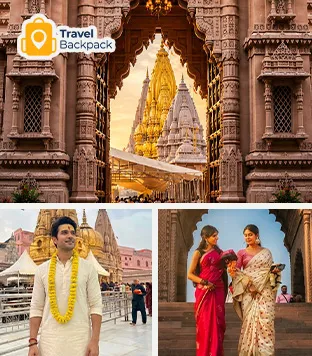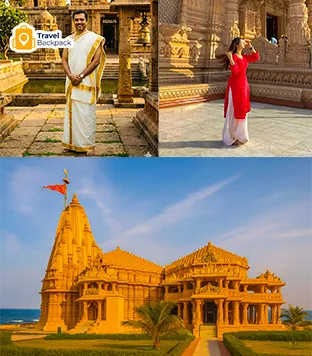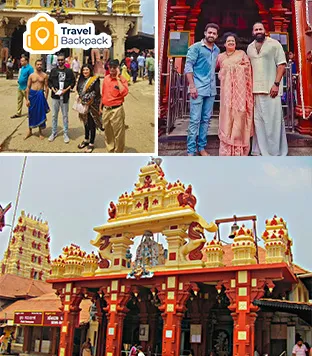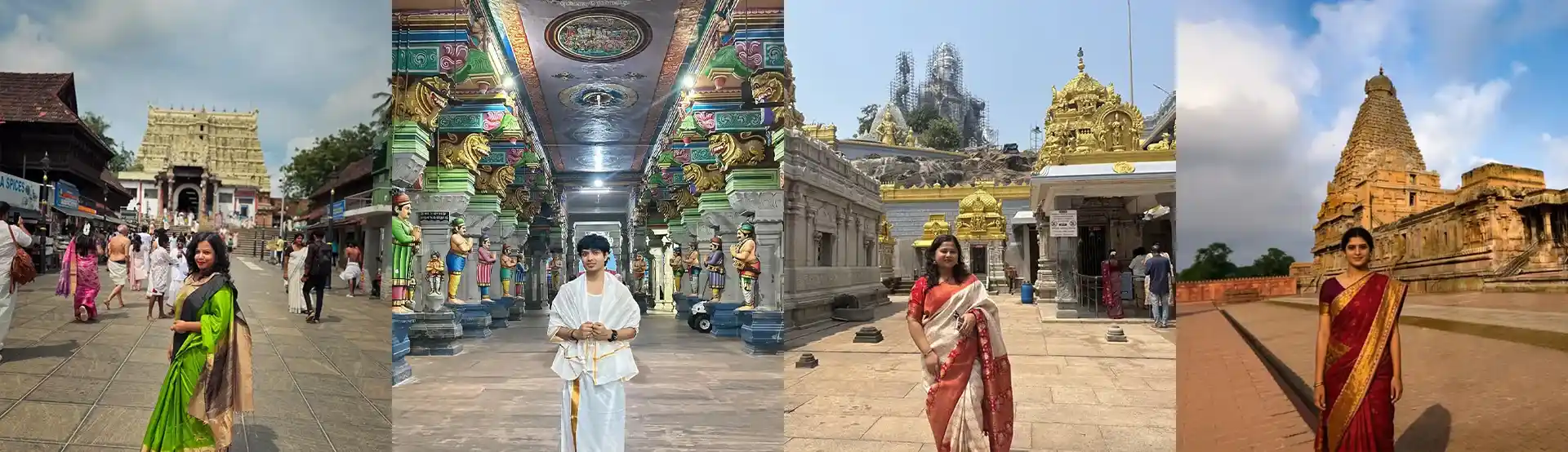
When visiting an Indian temple, we should wear modest clothes that cover the shoulders and knees. Loose and comfortable outfits are the safest choice. Shorts, sleeveless tops, and see-through clothing are usually not appropriate. Shoes must be removed before entering temple buildings, and some temples may also ask visitors to avoid leather items or cover their heads.
Traditional Indian clothes are a great option, but simple Western outfits also work if they are respectful. This guide covers the general dress rules for Indian temples.
Indian temples are deeply sacred places. People come to pray, to offer flowers, to sit quietly, and to feel close to God. Because of that, clothing is expected to be simple and respectful. The good news is that the dress code is very easy to follow once we understand the basic rules.
What to Wear in Indian Temples
The safest temple outfit is modest, loose, and comfortable. It should cover the shoulders and knees and feel easy to wear in India’s warm weather.
What Women Should Wear
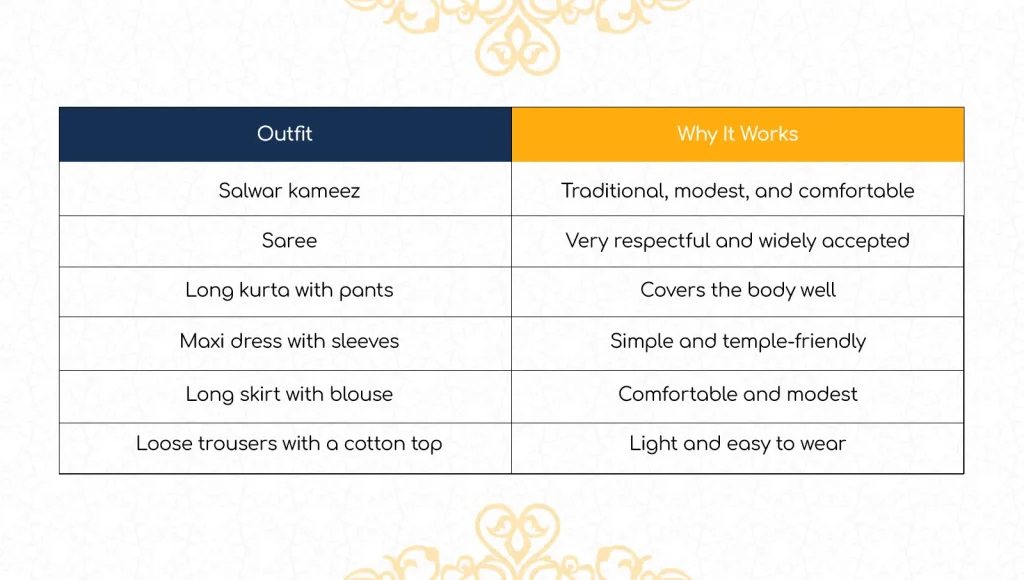
Women can wear salwar kameez, sarees, long kurtas with pants, maxi dresses, long skirts, loose trousers, and modest sleeveless tops. A salwar kameez is a traditional outfit with a long tunic, loose pants, and a matching scarf. It is one of the best and easiest ways to visit temples.
Good outfit choices for women include:
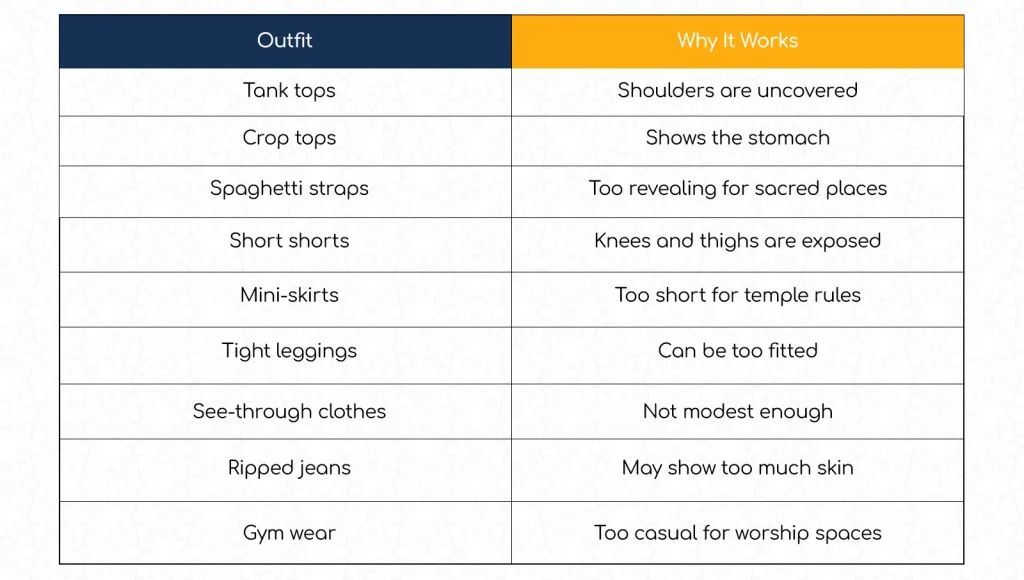
Women should avoid crop tops, tank tops, spaghetti straps, mini-skirts, short shorts, tight leggings, and see-through clothes. Leggings may cover the legs, but they can look too fitted for some people.
What Men Should Wear
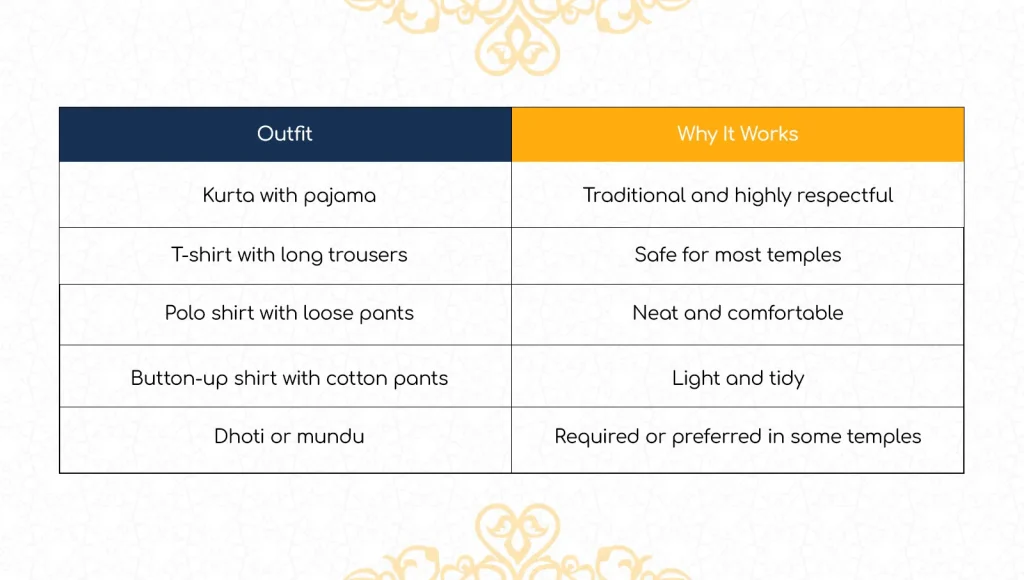
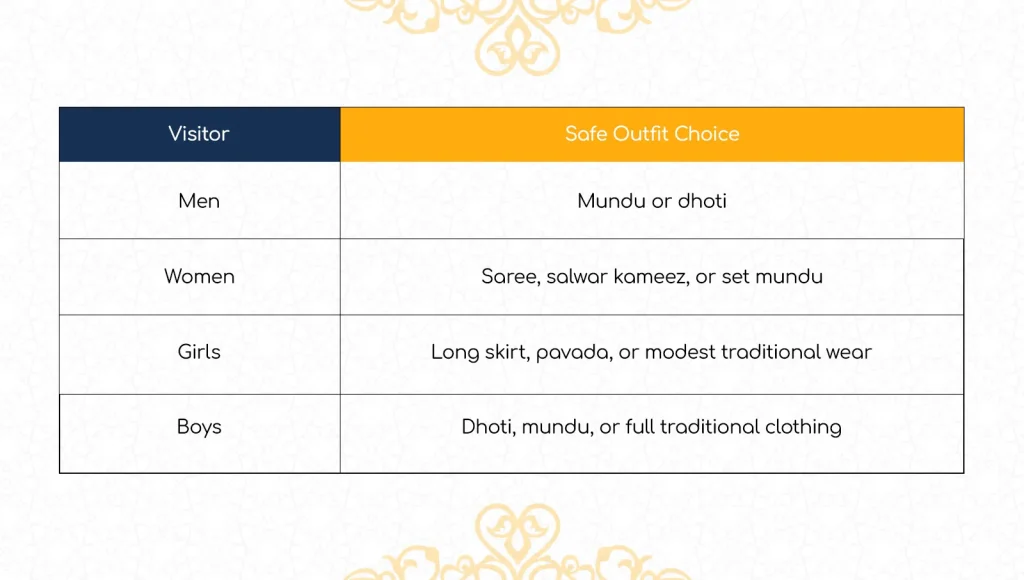
Men should wear a kurta, T-shirt, polo shirt, button-up shirt, or simple cotton shirt with full-length trousers or loose pants. In some South Indian temples, traditional clothing such as a dhoti or mundu may be preferred. A dhoti or mundu is a long piece of cloth wrapped around the waist and legs.
Good outfit choices for men include:
Men should avoid sleeveless tops, gym vests, short shorts, and ripped jeans. Long trousers are always the safest option.
What Children Should Wear
Children should also dress modestly, but the rules are usually a little more relaxed. Comfortable cotton clothes are best because temple visits often involve walking, standing, and waiting in line.
Good choices for children include:
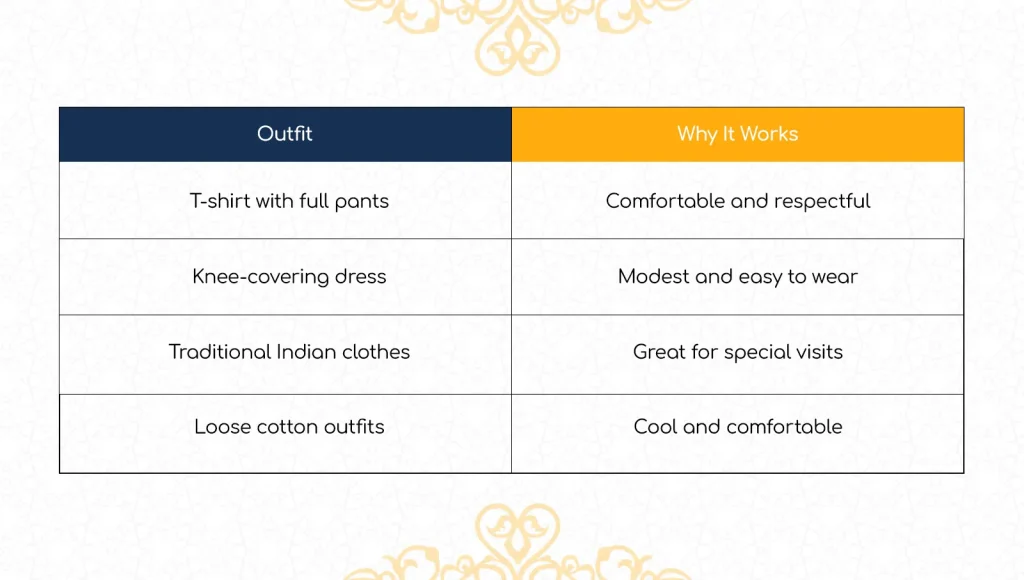
Parents often choose traditional outfits for children during festivals and important temple visits, but comfort matters most.
What Not to Wear in Indian Temples
Some clothes are perfect for beaches, shopping, or casual sightseeing, but not for temples. The safest rule is simple: if the outfit feels too short, too tight, or too revealing, it is probably not the right choice.
Shoes for Visiting Indian Temples
Visitors must remove their shoes before entering temple buildings. This is one of the most common temple customs in India. It keeps the sacred space clean and shows respect.
Because shoes come off so often, comfortable slip-on footwear is the best choice.
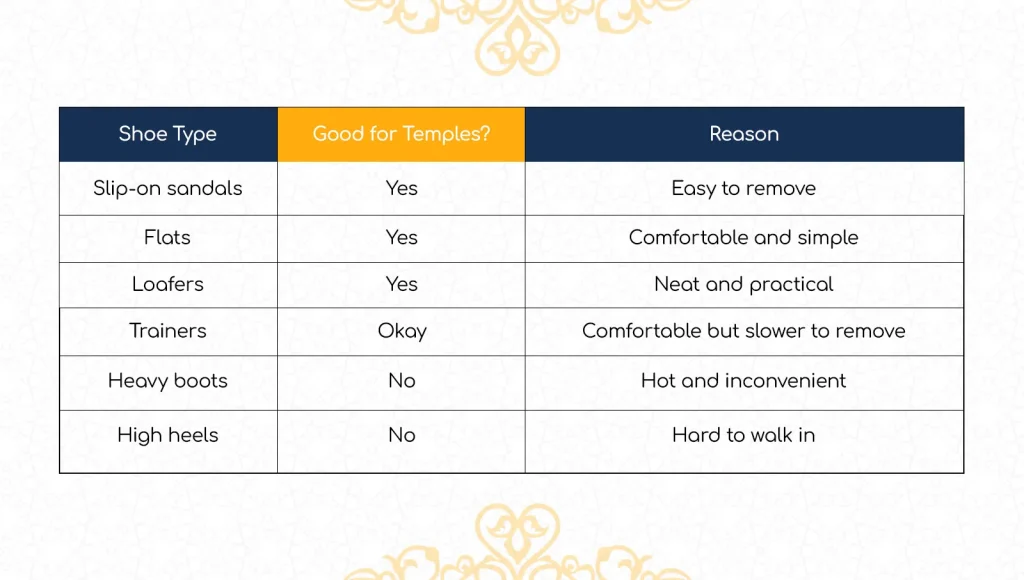
Many visitors walk barefoot inside temple areas. Socks can be helpful when stone floors are very hot.
Small Items to Pack for an Indian Temple Visit
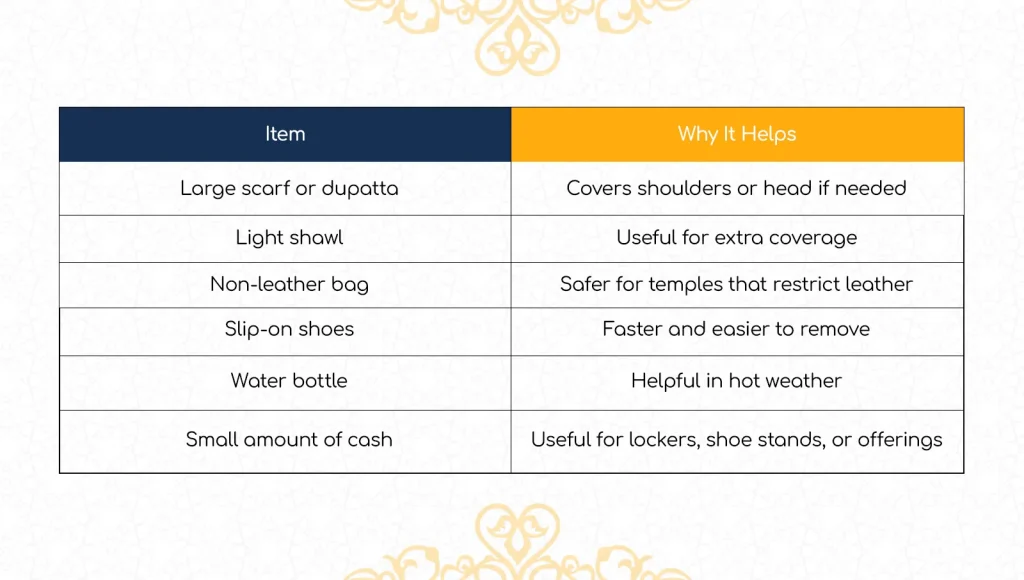
A few small items can make a temple visit much easier, especially when visiting stricter temples.
Dress Code for Popular Indian Temples
Most Indian temples follow the same basic rule: dress modestly and keep the body properly covered. But some temples are stricter because of local customs, old traditions, and temple management rules. This is why one outfit may work easily at one temple, but may not be accepted at another.
All the temples mentioned below are Indian temples. They are located in different parts of India, so their dress rules can feel a little different.
Guruvayur Temple Dress Code
Guruvayur Temple Dress Code is one of the strictest in India. This temple is in Kerala, and Kerala temples often follow traditional clothing rules very seriously. Men are usually expected to wear a mundu or dhoti. A mundu is a white cloth wrapped around the waist, and it is commonly worn by men in Kerala. Shirts are often not allowed inside the main worship area, so men may need to remove them before entering.
Women usually wear sarees, salwar kameez, set mundu, or other modest traditional outfits. A mundu is a traditional Kerala outfit for women, usually made with simple white or cream cloth. Young girls may be allowed to wear long skirts, pavada, or salwar-style outfits. The main idea is that clothing should look respectful, traditional, and properly covered.
Jeans, shorts, sleeveless tops, and very modern casual wear may not be accepted. Since this temple closely follows old customs, visitors should not try to test the rules. It is better to dress more traditionally here than to arrive in casual travel clothing and face problems at the entrance.
Padmanabhaswamy Temple Dress Code
Padmanabhaswamy Temple Dress Code is also very strict with clothing. This temple in Thiruvananthapuram, Kerala, follows a traditional dress code. Men usually wear a dhoti or a mundu. In many cases, shirts, T-shirts, and upper garments are removed before entering the inner temple areas.
Women should wear sarees, salwar kameez, long skirts with proper tops, or other modest traditional clothes. Western outfits are usually not the safest choice here. If someone comes in jeans, leggings, or short clothing, they may be asked to change or cover up. Some visitors wear a dhoti or a wrap cloth over their regular pants.
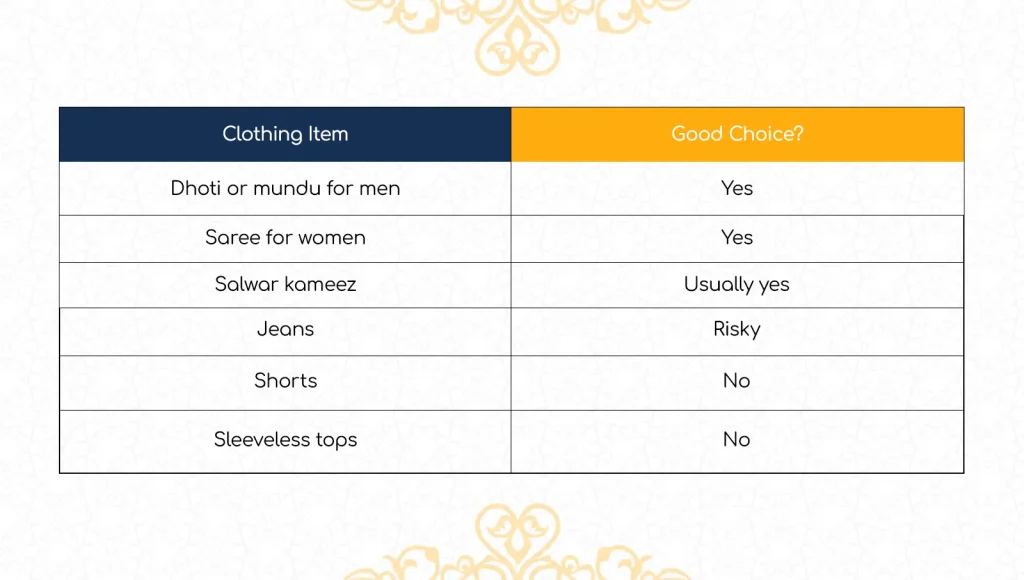
This temple is not the place for casual outfits. It has a very serious and traditional atmosphere, so clothing should match that mood. Clean, simple, traditional clothing works best. If there is any doubt, choose the outfit that covers more and looks more respectful.
Rameshwaram Temple Dress Code
Rameshwaram Temple, also called Ramanathaswamy Temple, is in Tamil Nadu. The Rameshwaram Temple Dress Code requires visitors to dress modestly, as Tamil Nadu temples often follow respectful clothing rules that can be stricter in certain areas. Men should wear full-length pants, a dhoti, or traditional clothing, while women should wear sarees, salwar kameez, long skirts, or modest full-length outfits.
The temple is large, and visitors may walk through long corridors, stand in lines, and enter wet areas if they participate in temple rituals. So, clothes should not only be modest but also comfortable. Avoid anything that becomes uncomfortable when walking for a long time.
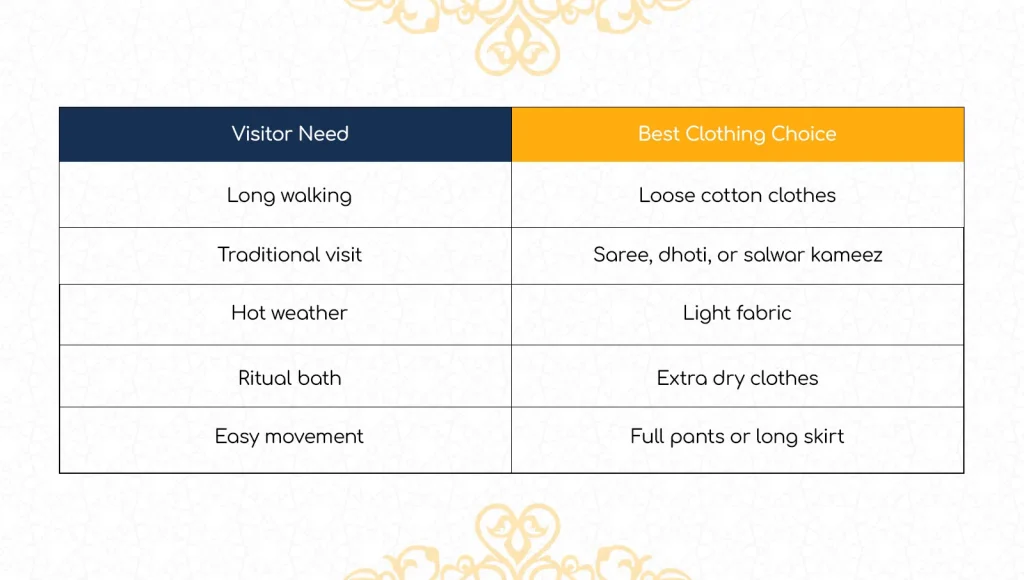
Some visitors may also take a holy bath before entering worship areas, so it is smart to carry a change of clothes if needed. A simple cotton outfit is usually the easiest choice because it dries faster and feels lighter.
Murudeshwar Temple Dress Code
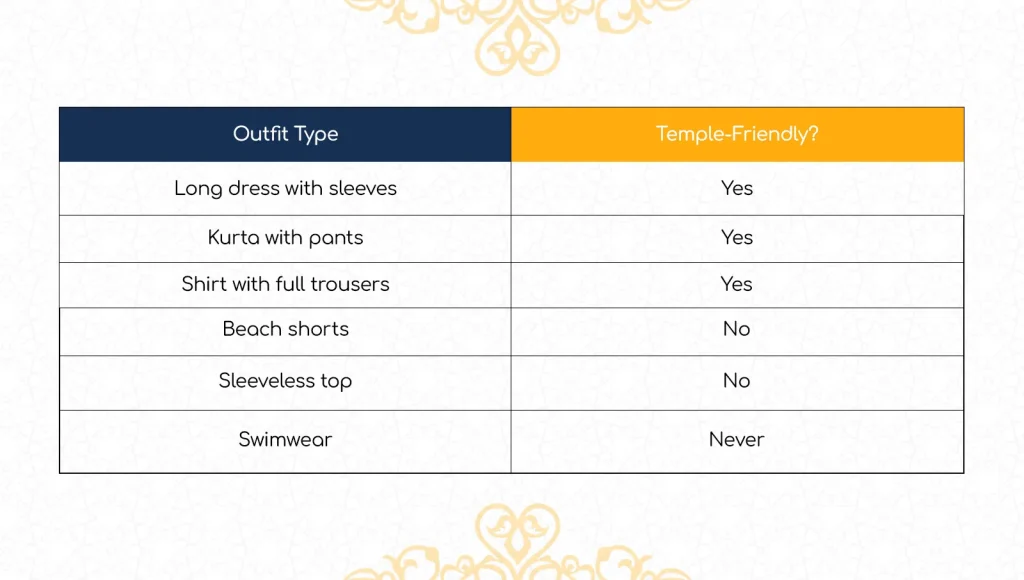
Murudeshwar Temple is in Karnataka and is known for its large Shiva statue and sea-facing location. The Murudeshwar temple’s dress code may feel a little more relaxed than that of some strict Kerala temples, but modest clothing is still expected. Since it is also a popular tourist place, many visitors arrive in casual clothing. Still, beach-style clothes should not be worn inside the temple.
Women can wear salwar kameez, long dresses, long skirts, kurtas, or loose trousers with covered tops. Men can wear full pants with a T-shirt, shirt, or kurta. Shorts, sleeveless tops, crop tops, and very tight clothes should be avoided. Even if the temple area is close to the beach, visitors should not treat it like a beach stop.
Brihadeeswara Temple Dress Code
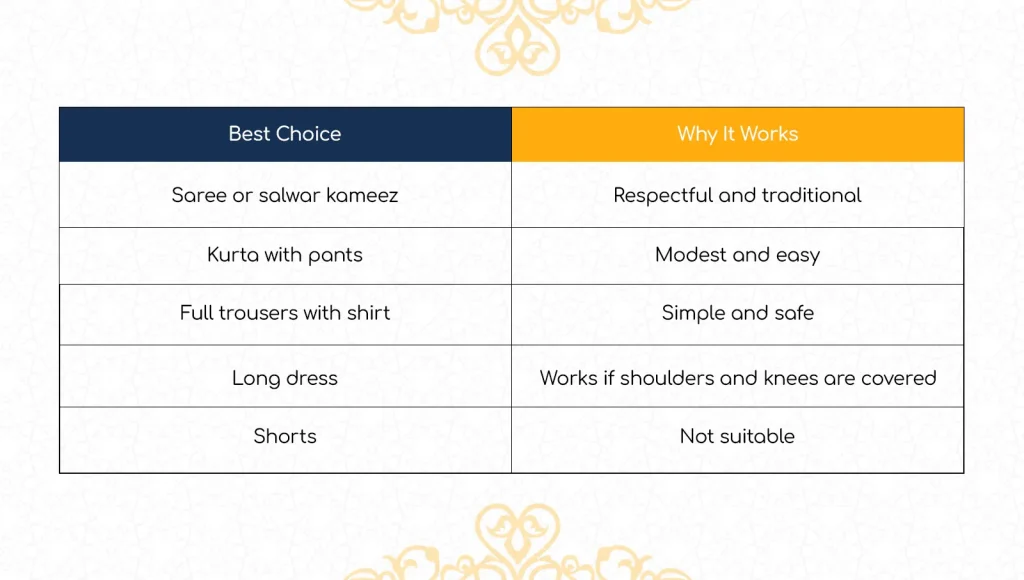
Brihadeeswara Temple Dress Code is generally modest and respectful, as Brihadeeswara Temple in Thanjavur, Tamil Nadu, is a very old and famous temple with strong cultural value. Since it is also visited by many tourists, the rules may not feel as strict as those at some Kerala temples, but modest dress is still expected.
Women should wear sarees, salwar kameez, long skirts, kurtas, or modest dresses. Men can wear shirts, T-shirts, kurtas, or full trousers. Shorts and sleeveless clothing are not a good idea. Since this temple has large stone areas and open spaces, light clothing and comfortable walking shoes are helpful before entering the shoe-removal area.
Govindaraja Temple Dress Code
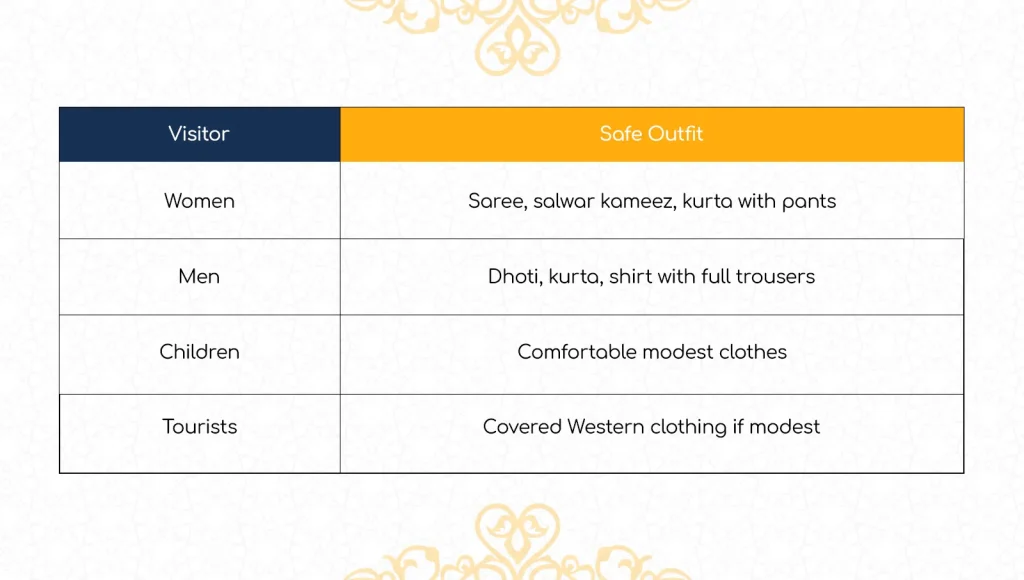
Govindaraja Temple Dress Code guidelines are simple but important. Govindaraja Temple is in Tirupati, Andhra Pradesh. Since Tirupati is a major religious area, visitors should dress respectfully. Many devotees wear traditional clothing, especially when visiting famous temples in and around Tirupati.
This temple is a good example of why we should not dress only for photos. The place is active, religious, and full of people coming for prayer. So the outfit should help visitors move calmly, stand comfortably, and respect the mood of the place.
Head Covering Rules in Indian Religious Places
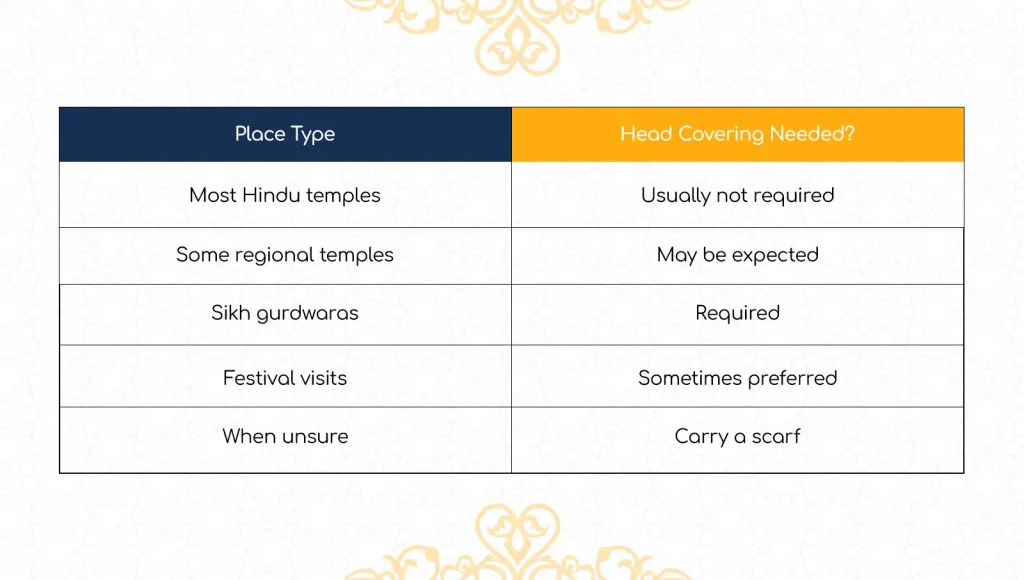
Most Hindu temples do not require everyone to cover their heads. But some places may expect it, especially in certain regions or specific religious spaces. Women may also use a dupatta in Hindu temples if they want to feel more covered. It is not always required, but it can be useful. Men can also carry a small cloth if visiting a place where a head covering is expected.
Leather Rules in Indian Temples
Some Indian temples ask visitors to avoid leather items. Leather comes from animal skin, and many temple traditions avoid animal-based items in sacred areas. This is especially common in temples where purity rules are followed more strongly.
Leather belts, wallets, bags, jackets, and watch straps may be restricted in some places. Not every temple checks this, but it is still safer to carry non-leather items when visiting strict temples. A cloth bag or simple fabric pouch is a better option. This does not mean visitors need to panic about every tiny item. But if a temple is strict, old, or famous, avoiding leather is the smarter choice.
Final Thoughts
The Indian temple dress code is not hard once the basic idea is clear. Cover shoulders, cover knees, wear clean clothes, choose loose fabric, and remove shoes before entering sacred spaces. Some temples are relaxed, but many famous temples are stricter, especially in South India. So it is always better to dress a little more modestly than to risk being stopped at the entrance.
A good temple outfit should help visitors feel calm, covered, and ready to enter respectfully. It should not need constant fixing. It should not feel like beachwear, gymwear, or partywear. The best outfit is simple, modest, and easy to move in.
FAQs
Women can wear jeans to some relaxed temples if they are full-length and paired with a modest top. But jeans may not be allowed in stricter temples, especially in Kerala and some South Indian temples. A salwar kameez, saree, or long kurta is safer.
Shorts are not a safe choice for Indian temples. Some relaxed temples may not require visitors to wear full-length pants, dhoti, or mundu, but many temples do.
Sleeveless tops are usually not suitable. Shoulders should be covered. If someone is wearing a sleeveless top, a scarf, a shawl, a cardigan, or a button-up shirt can serve as a cover-up.
Yes, shoes are removed before entering temple buildings and sacred areas. Most temples have a shoe stand or a place near the entrance where visitors can leave their footwear.
Socks are usually allowed in many temples, but this can vary by place. Some visitors wear socks because the temple floors can be hot. In stricter temples, it is better to check before entering.