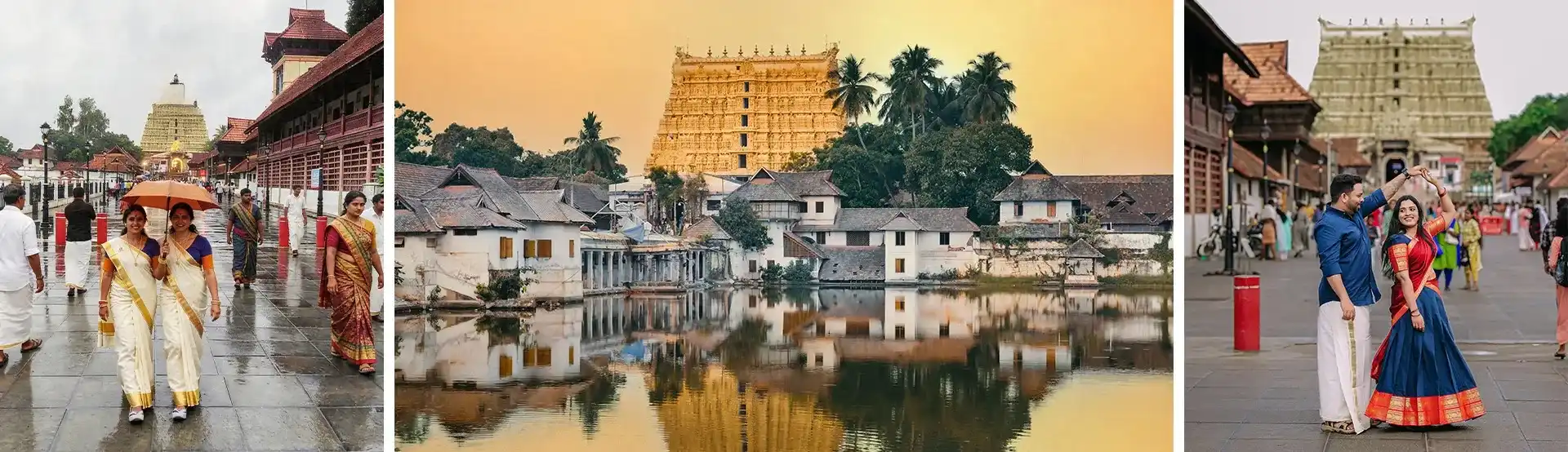
If you’re planning to visit Padmanabhaswamy Temple, there’s one thing you really don’t want to figure out at the entrance. The dress code. A lot of people reach there thinking their outfit is “probably fine”… and then get stopped. Not because they did something wrong, but because the rules here are very specific. So instead of dealing with that last-minute stress, it’s way easier to just know everything before you go.
We’re going to walk through:
- What you can wear
- What won’t work
- And a few small things that can save you time and confusion
Why This Temple Is Particular About Clothing
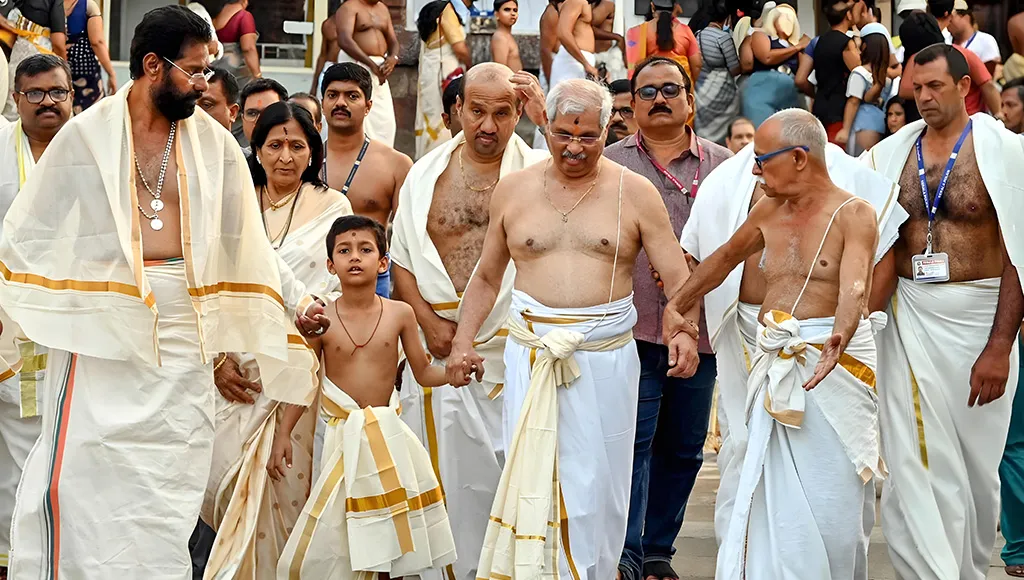
This is usually the first question people have. Why does it matter so much? At Padmanabhaswamy Temple, the idea is very simple. When you enter, you step into a space that follows very old traditions. And those traditions are still followed closely today. Clothing is part of that. It’s not about looking “good” or “proper” in a modern way. It’s more about keeping things simple and respectful.
When everyone dresses in a similar, traditional way, the whole place feels quieter and more focused. You’ll actually notice it when you’re there. There’s less distraction. Less noise in a visual sense. People just blend into the same calm environment. And once you understand that, the dress code starts to feel less like a rule and more like part of the experience.
Padmanabhaswamy Temple Dress Code for Men
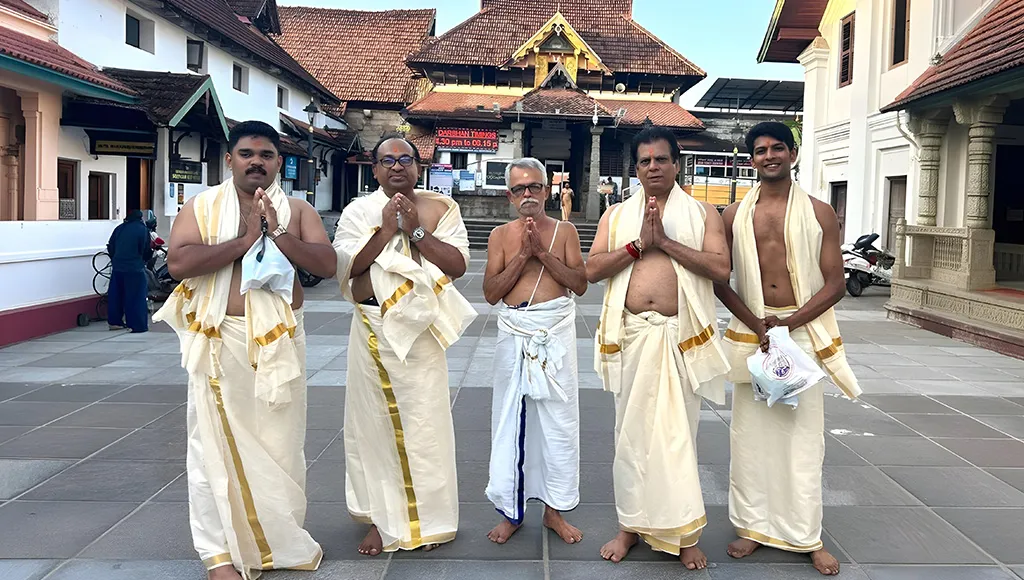
For men, the expected outfit is a dhoti (also called mundu). That’s the traditional cloth wrapped around the waist. If you’ve never worn one before, don’t worry, it’s simpler than it looks.
What Men Should Wear
A dhoti or mundu (usually white or cream). Wrapped properly so it reaches below the knees or towards the ankles. That’s it. Nothing complicated.
Upper Body Rule (This Is Where People Get Confused)
Men are expected to remove their shirts before entering. So, no T-shirts or shirts or vests. If that sounds uncomfortable, there’s an easy option. You can carry something called an angavastram. That’s just a cloth you can place over your shoulder. It doesn’t replace a shirt fully, but it gives a bit of coverage and feels more comfortable.
What Usually Doesn’t Work
This is where most people slip up. These are not allowed inside:
- jeans
- trousers
- shorts
- t-shirts
- anything Western-style
Some people try to “adjust” by wrapping a dhoti over pants. Sometimes that works, sometimes it doesn’t. It really depends on how strictly it’s being checked that day. So the safest option is simple: wear it properly.
Padmanabhaswamy Temple Dress Code for Women
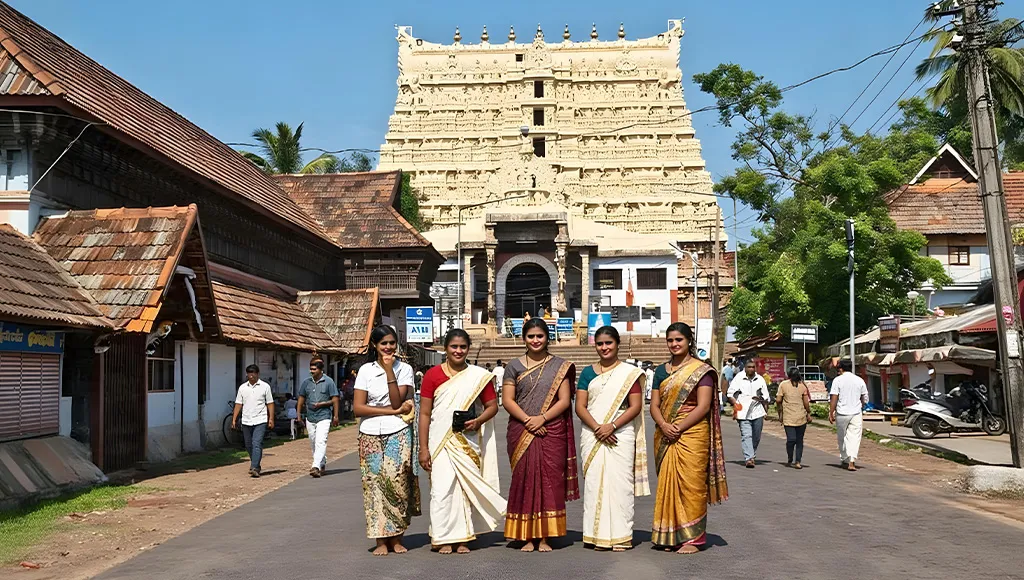
For women, the rules feel a bit more flexible, but there’s still a clear direction. The main idea is traditional and modest.
What Women Can Wear
- Saree
- Set-mundu (traditional Kerala outfit)
- Long skirt with blouse
All of these work well and are commonly worn inside.
What If You’re Wearing Something Else?
This is something many people don’t know beforehand. If you’re wearing a churidar or even Western clothes, you can still enter. But there’s a small step. You’ll need to wear a dhoti-style wrap (called a dhotir) over your clothes. This is easily available right outside the temple. So instead of changing your whole outfit, you just add this layer on top, and you’re good to go.
What to Avoid
To keep it simple, these don’t work on their own:
- jeans
- leggings
- short dresses
- western outfits
Even if they’re modest, they’re still not considered traditional enough for entry without covering.
Practical Tips That Actually Make Your Visit Easier

These are the kind of things people usually figure out after they reach the temple. So if you know them before, everything just feels smoother.
Plan Your Outfit Like You Plan Your Travel
Most people plan their route, timing, even parking… but forget about clothing. And that’s exactly where the delay happens. If you already know the dress code, just set your outfit aside before you leave. Keep it ready like you would for any important event. For men, that means carrying a dhoti. For women, it means deciding whether you’ll wear something traditional or just carry a wrap. This one small step saves you from:
- standing outside, figuring things out
- rushing last minute
- or feeling unsure at the entrance
It sounds basic, but it’s the difference between a smooth visit and a slightly stressful one.
Don’t Try to “Adjust” Your Outfit Last Minute
A lot of people think they can make their outfit work. Like:
- “This top is long enough.”
- “These pants are simple, it should be fine.”
- “I’ll just manage somehow.”
That usually doesn’t work here. This temple doesn’t go by “close enough.” It follows a clear structure. So instead of trying to adjust your outfit mentally, it’s better to either:
- wear the correct clothing from the start
- or plan to rent/buy something outside
It removes guesswork completely.
Reach a Little Earlier Than You Think You Need To
Even if you’re perfectly dressed, there are still small steps before entering. Things like:
- removing footwear
- depositing items
- waiting in line
And if you need to change clothes, that adds extra time. So instead of arriving exactly on time, give yourself a buffer. Even 20-30 extra minutes makes everything feel calmer instead of rushed.
Keep Your Outfit Comfortable, Not Just “Correct”
This is something people overlook. Yes, your outfit needs to follow the rules. But it also needs to feel comfortable. Kerala weather can feel warm and humid, which basically means the air feels slightly heavy and sticky. If your clothing is:
- too tight
- too thick
- or hard to manage
You’ll feel it very quickly, especially if there’s a queue. So go for:
- light fabrics
- easy movement
- something you don’t have to keep adjusting
Comfort matters more than people expect.
Mentally Prepare for the “No Shirt” Rule (For Men)
This is one of the biggest surprises for first-time visitors. It’s not just about wearing a dhoti. It’s also about removing the shirt. For some people, this feels uncomfortable at first. But once you see everyone around you doing the same, it starts to feel normal very quickly. If you still feel unsure, carry an angavastram. It gives you that small layer of comfort without breaking the rules.
Travel Light, It Saves You More Time Than You Think
A lot of items are not allowed inside. This includes:
- phones
- cameras
- electronic keys
There are counters to store them, but that means extra steps, extra waiting, and extra handling. So the easiest approach is simple. Carry only what you actually need. It makes your entry faster and your overall experience smoother.
Observe Others, It Helps More Than Instructions
If you ever feel unsure once you reach there, just look around. You’ll immediately notice: how people are dressed, how they carry themselves, and how the flow works. Sometimes, observation explains things faster than any guide. It also helps you adjust naturally without overthinking.
Don’t Let the Rules Stress You Out
This is important. A lot of people start feeling pressured when they hear “strict dress code.” But once you understand it, it’s actually very simple. There are only a few clear expectations. And once those are sorted, everything else becomes easy. So instead of seeing it as something restrictive, it helps to see it as part of how the visit is meant to be experienced.
Give Yourself Time to Settle Before Entering
Most people rush straight in after getting ready. But if you pause for a moment, the whole experience feels different. Take a minute. Adjust your clothing properly. And take a breath. Let your mind slow down a little. Because once you step inside, the environment changes. And if you enter in a rushed state, you miss that shift.
If Something Feels Confusing, Ask Without Hesitation
This is very normal. If you’re unsure about:
- How to wear something
- whether your outfit is okay
- where to go next
Just ask. Shopkeepers, staff, and even other visitors are used to helping. You don’t need to figure everything out alone.
What If You Reach the Temple in the “Wrong” Outfit?
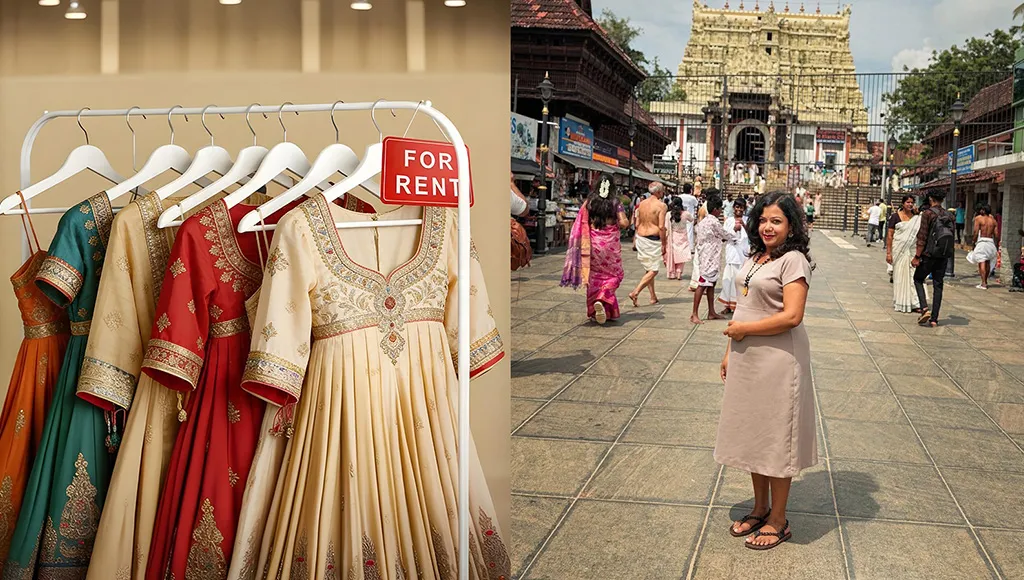
This happens more than you think. People come in jeans or a nice modest outfit, thinking it should be fine… and then realise it doesn’t meet the temple rules. First thing, don’t stress. You don’t have to cancel your visit or go all the way back. The area outside the temple is already set up for this exact situation.
Renting Clothes Is Super Easy
Right outside the temple, you’ll find small stalls and shops. They usually have:
- dhotis for men
- wrap-around dhoti for women
- Angavastram (shoulder cloth)
The process is quick. You pick what you need, pay a small amount, and you’re sorted within minutes. No long waiting. No confusion.
Buying Instead of Renting (Sometimes Better)
If you’re not too sure about renting, you can also just buy. A lot of people actually prefer this because:
- The clothes are new
- They feel more comfortable
- You don’t have to return anything
And honestly, prices are usually reasonable. If you’re planning to visit temples again, it’s actually useful to keep them.
Where Do You Change?
There are changing areas near the temple. So the flow usually looks like this:
- reach the temple
- Get the right clothing
- change nearby
- enter without any issue
Once you know this, the whole situation feels much simpler.
A Few Small Things That Make Your Visit Smoother

These aren’t “rules,” but they make a big difference when you’re actually there.
Try Not to Leave It Till the Last Minute
If you already know the dress code, it’s better to plan your outfit before leaving. It saves you time outside the temple and avoids that last-minute rush.
Go for Comfort, Not Just “Correct”
Kerala can feel warm and a bit humid. Humid just means the air feels slightly sticky and heavy. So if your clothes are too tight or thick, it can get uncomfortable quickly. Light and breathable is always the better choice.
Carry Less, Trust Us on This
Electronics are not allowed inside. This includes:
- phones
- cameras
- even some car keys with remote locks
There are counters to keep them, but carrying less just makes things easier. Less waiting. Less handling.
Footwear Situation
Shoes and slippers have to be removed outside. There are proper areas for this, so you don’t need to worry about it.
Things People Assume… But Shouldn’t

This part is important because a lot of confusion comes from assumptions.
“This Should Be Fine, It Looks Modest”
A lot of outfits look modest but still don’t work here. For example:
- leggings with a long top
- simple western dresses
- Fusion outfits
Even if they look decent, they may still need covering.
“They Might Allow It Since It’s Not Crowded”
Nope. The rules don’t change based on timing. Morning, afternoon, less crowd, more crowd, it’s all the same.
“I’ll Fix It Inside”
You won’t be able to. Dress code is checked before entry. So everything needs to be sorted outside.
Final Thoughts
Here’s the thing most people don’t expect. The dress code becomes part of the experience. At first, it feels like a restriction. But once you’re inside, it starts to make sense. Everyone is dressed simply. No distractions or comparisons. No noise in how people look. And that changes how the place feels. It becomes quieter in a different way. More focused. More grounded.
You’re not thinking about what you’re wearing anymore. You’re just present. So instead of seeing the dress code as something to “deal with,” it helps to see it as part of how the experience is shaped and how you share your experience with others. A small adjustment outside… makes a big difference inside.
FAQs
You can wear it outside, but you’ll have to remove it before entering. So it’s better to be prepared for that moment than to be caught off guard.
Not always. If you’re already wearing something like a churidar, you can simply wear a dhoti-style wrap over it. That’s why many people don’t do a full outfit change.
If your outfit is not fully traditional, then yes, it becomes necessary. It’s basically the step that makes your outfit acceptable.
No. Even if your clothing is perfect, items like phones or electronics can still stop you. So both things matter.
Kids have slightly relaxed rules. But still, it’s better to keep their clothing simple and respectful to avoid any confusion.
Yes, usually. Shopkeepers or even people nearby often help. It’s very normal, especially for first-time visitors.
At first, maybe a little. But once you see everyone around you dressed the same way, it feels completely normal. You settle into it very quickly.
Honestly, yes. It sounds small, but it shifts your mindset. You feel more present, less distracted, and more connected to the space.