Planning a visit to Meenakshi Temple in Madurai? One of the first things to check is the Meenakshi Temple dress code. As an active Hindu temple and important place of worship, visitors are expected to dress modestly and follow certain entry rules.
The dress code is just one part of the visit. Rules may also apply to photography, mobile phones, footwear, and items you can carry inside the temple. Knowing these requirements before you arrive can help you avoid delays and enjoy your visit without unnecessary stress.
In this guide, you’ll learn what to wear to Meenakshi Temple, the main entry rules, what you can and cannot carry, and practical tips for first-time visitors.
Why the Dress Code Matters at Meenakshi Temple
Meenakshi Temple in Madurai is one of the most sacred temples in South India. It is dedicated to Goddess Meenakshi and Lord Sundareswarar. Devotees believe this space is spiritually powerful, making it one of the most revered spiritual places to visit in India. In Hindu tradition, modest clothing shows respect, as temples are considered holy spaces rather than sightseeing spots. That is why visitors are expected to dress simply and modestly, helping maintain a peaceful atmosphere focused on prayer.
Dress Code for Women
Here are all the details.
What Women Should Wear
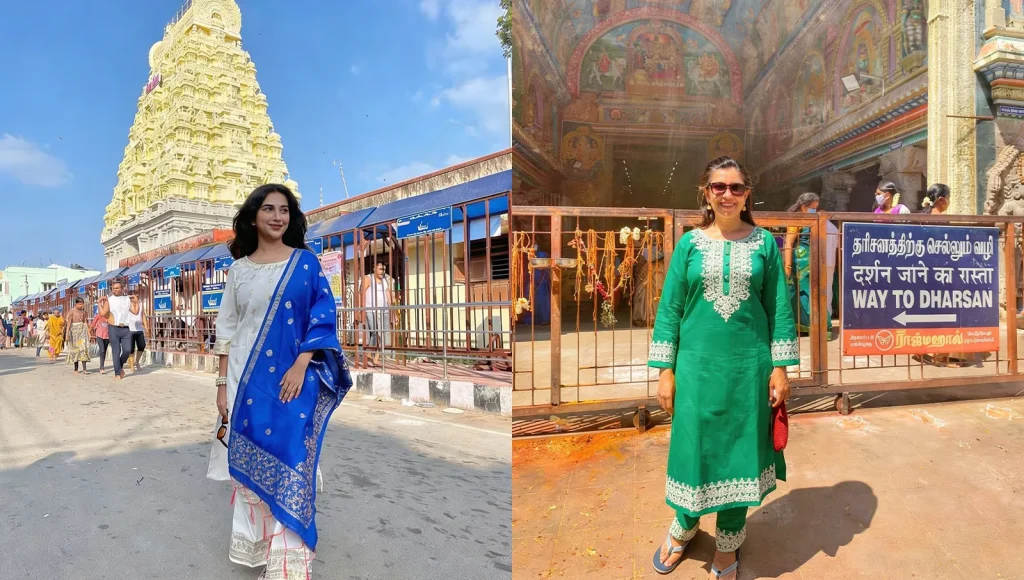
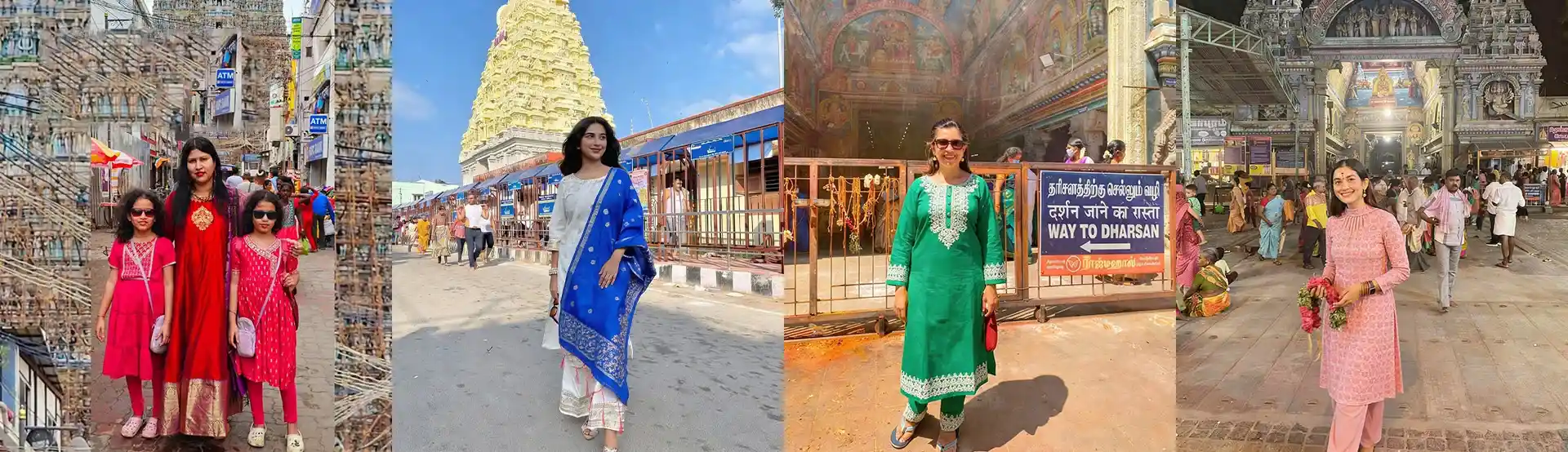
Women are expected to wear clothing that covers their shoulders and knees completely. Traditional Indian outfits are preferred, but modest Western clothing is also allowed. Safe options include saree, salwar kameez, churidar, long skirts with sleeves, or full-length dresses. A saree is a long fabric wrapped around the body. A salwar kameez includes loose pants and a long tunic.
If choosing western wear, make sure it is loose and not sleeveless.
What Women Should Avoid
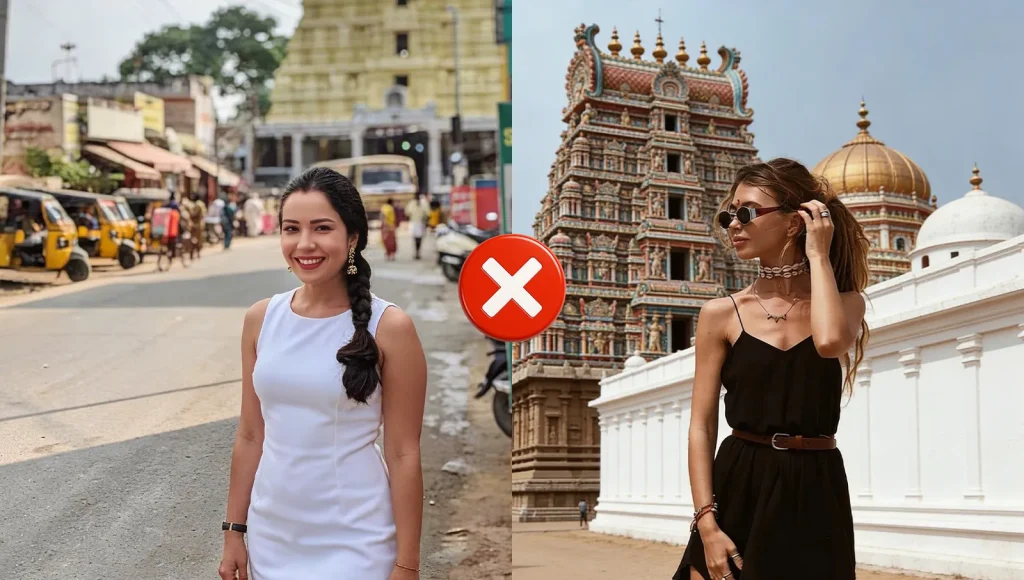
Short dresses, mini skirts, sleeveless tops, crop tops, and tight outfits are not allowed. Even if the outfit looks decent elsewhere, it may not be acceptable here. Beachwear, ripped jeans, and clothing that shows shoulders or knees can result in denied entry. When unsure, choose something simple and covered. Modest always works.
Dress Code for Men
As a man, here’s what you can wear.
What Men Should Wear
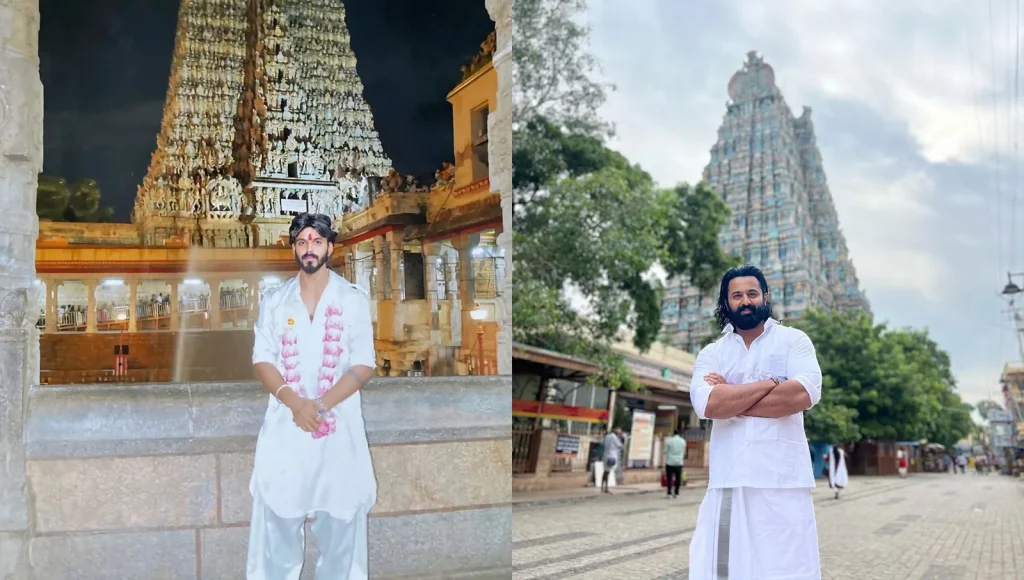
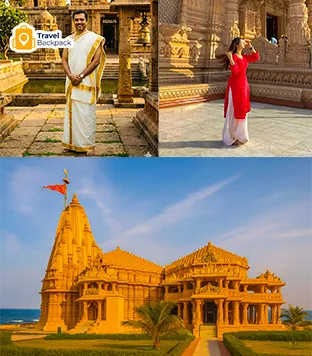
Men should wear a dhoti or veshti with a shirt. A dhoti is a traditional cloth wrapped around the waist. Full-length trousers with a proper shirt are also acceptable. Kurtas paired with pyjama pants are suitable as well. The goal is to look neat and modest, not casual or sporty.
What Men Cannot Wear
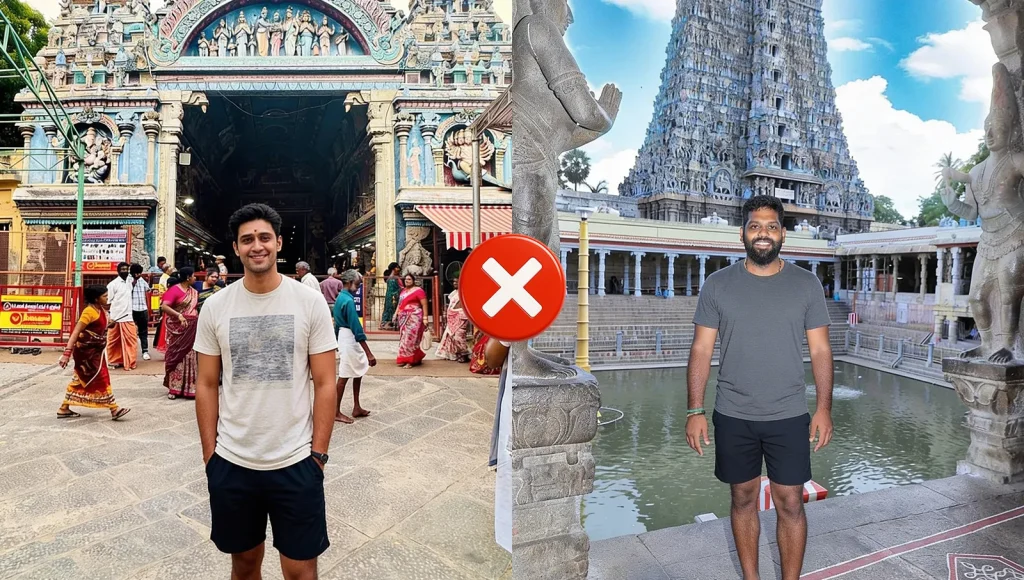
Shorts are strictly not allowed. Sleeveless vests, gym wear, or beach-style clothing are not permitted. In certain inner areas, men may be asked to remove their upper garments. This happens in some sanctum areas as part of tradition. Follow instructions calmly if this applies.
Special Rules for the Inner Sanctum
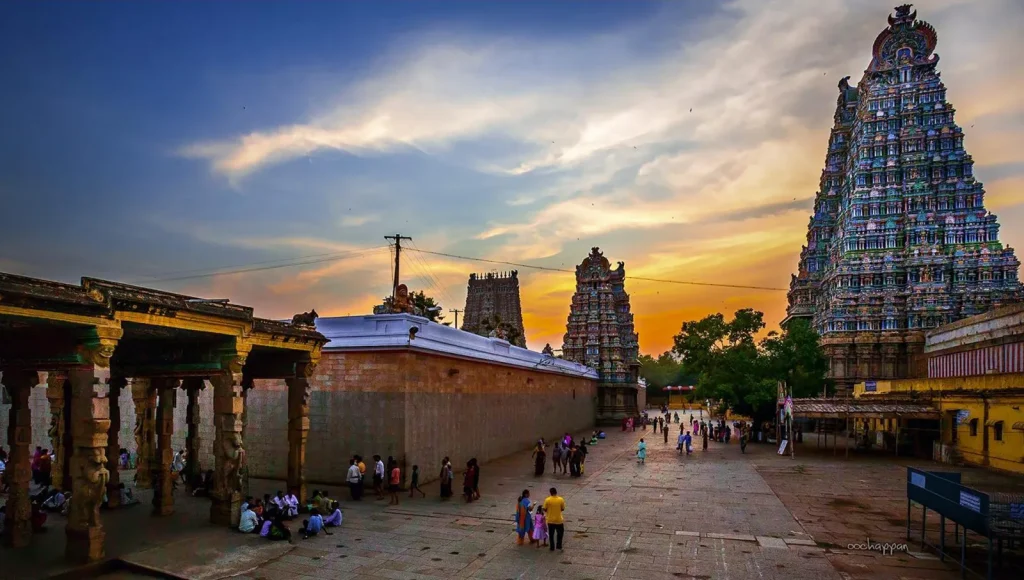
The inner sanctum is the most sacred area where the main deity idol is placed. Not everyone may be allowed inside every section. In some parts, men are required to remove their shirts before entering. This symbolises humility. It does not apply everywhere, only in specific sacred zones.
Clothing Rules for Children
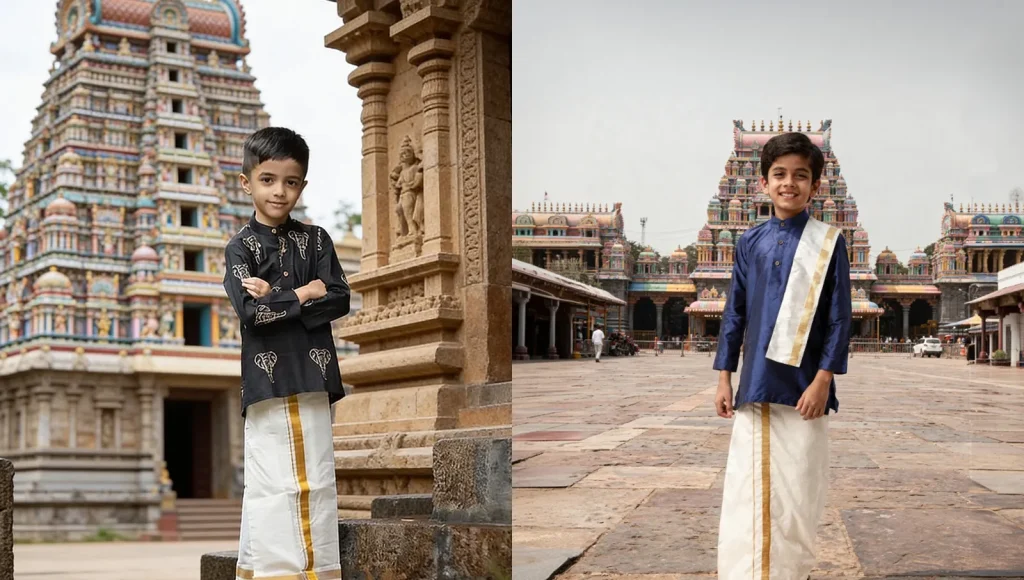
Children must also follow modest dressing guidelines. Simple cotton clothes that cover the shoulders and knees are ideal. Parents should prepare their children in advance so there are no issues at the gate.
Items You Cannot Carry While Going Inside the Temple
Meenakshi Temple follows strict entry regulations. These rules are not random. They are meant to maintain spiritual focus, protect the sanctity of the temple, and ensure smooth crowd management. Security screening is serious, so it is best to carry only the bare essentials.
Mobile Phones and Cameras
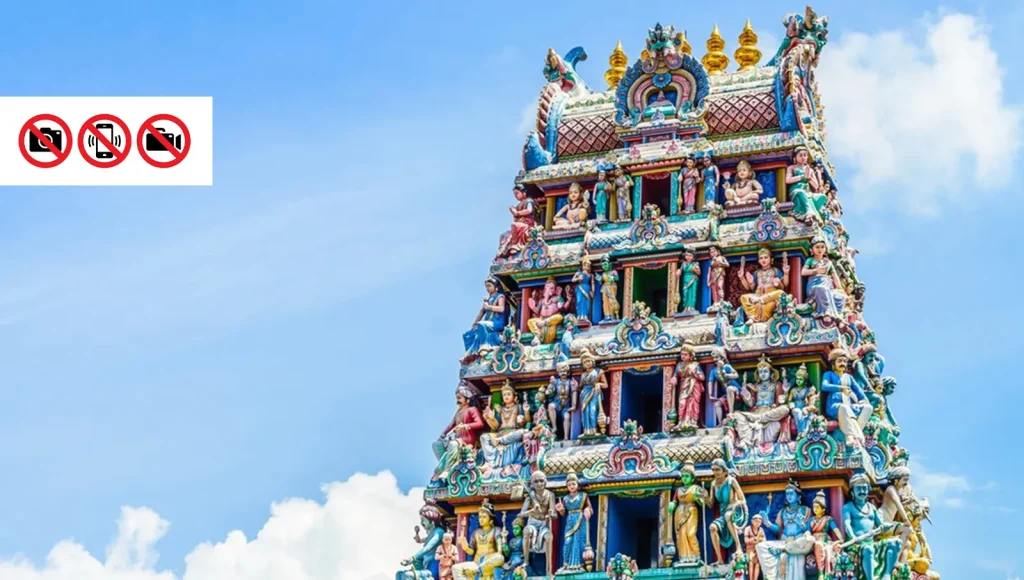
Mobile phones are strictly banned inside the temple complex. Cameras, video cameras, and recording devices are also not allowed.
This rule applies to everyone, including tourists. The temple wants to maintain a peaceful spiritual atmosphere without distractions from ringing phones, flashing lights, or constant photography. Security checks are thorough, and attempting to hide devices can cause delays or denial of entry.
Smartwatches and Electronic Gadgets
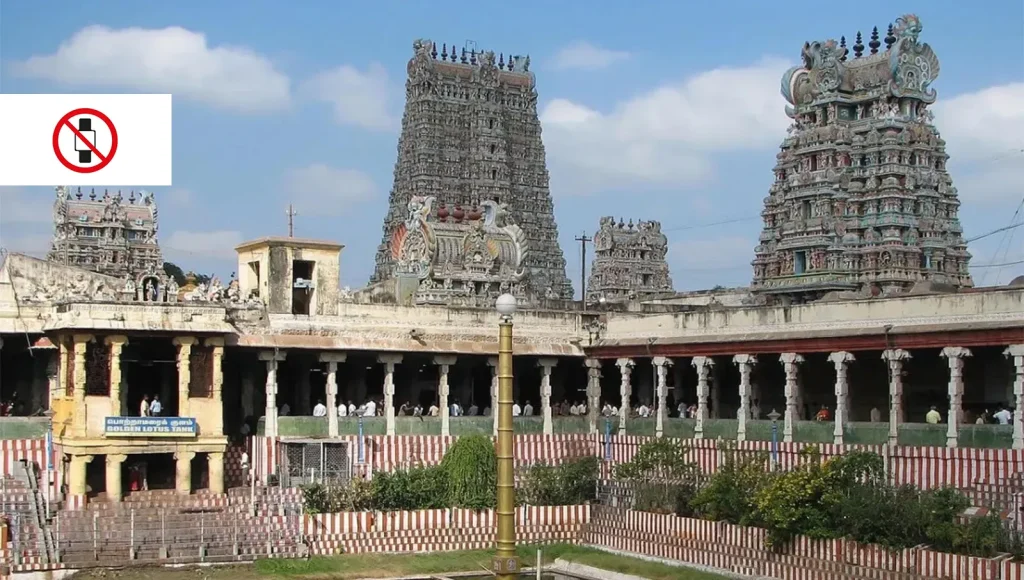
Smartwatches with camera or recording features may also be restricted. Tablets, power banks, Bluetooth devices, and earphones are not permitted. Even if a device is small, if it can record or capture images, it is generally not allowed. The temple prefers zero electronic disturbance inside sacred areas.
Items Made Of Leather
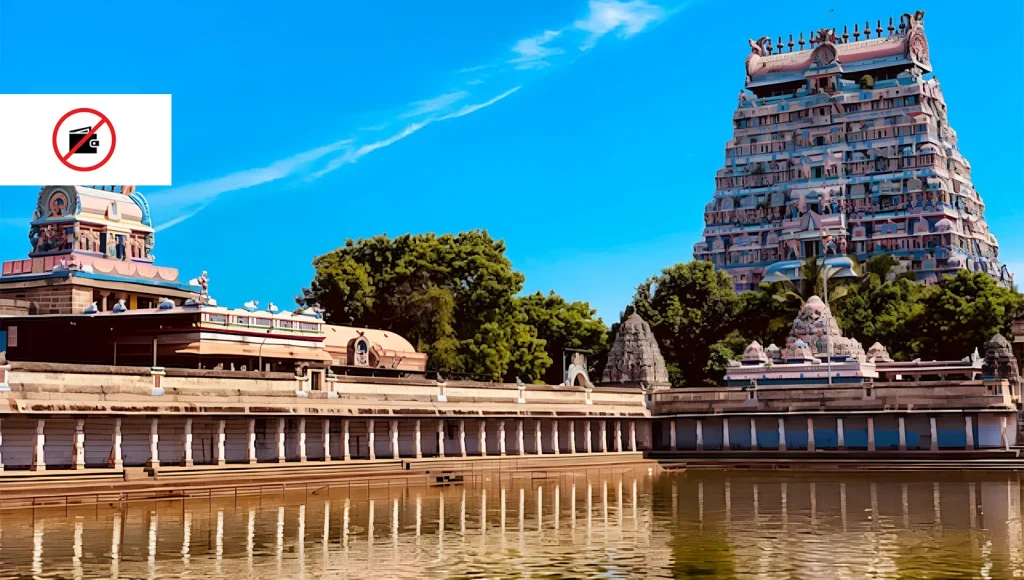
Leather belts, wallets, handbags, and other leather accessories are prohibited. Leather is made from animal hide, and in many Hindu traditions, it is considered impure inside sacred spaces. Visitors are encouraged to avoid wearing leather belts and carrying leather bags. If unavoidable, check at the gate whether it must be deposited before entry.
Food and Beverages
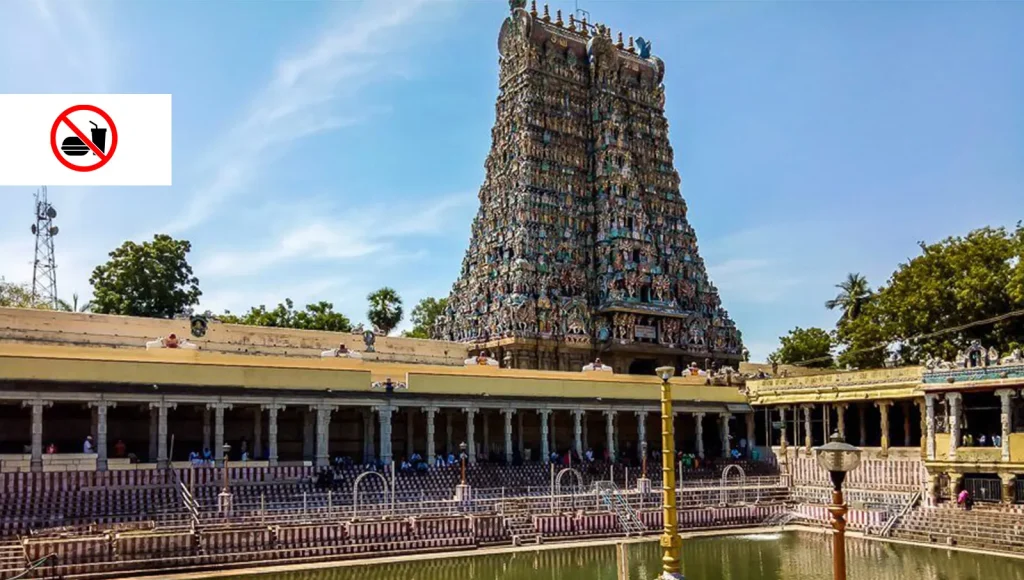
Outside food and drinks are not allowed inside the temple premises. This includes packaged snacks, water bottles, and soft drinks. The rule helps maintain cleanliness and prevents littering. Visitors should eat and hydrate before entering. Food offerings, if allowed, must follow temple guidelines and be purchased from approved counters.
Large Bags and Backpacks
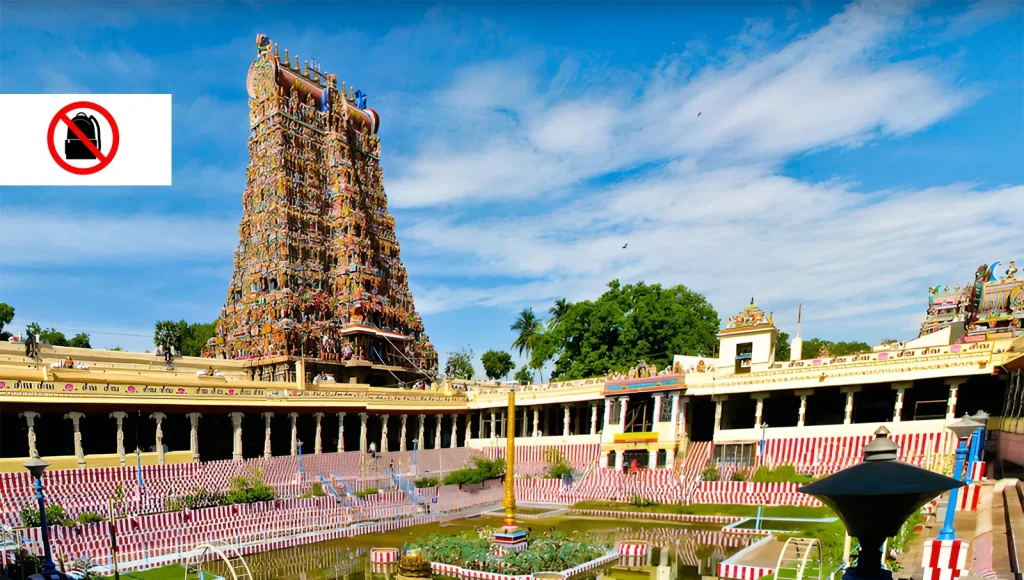
Large bags, backpacks, and suitcases are not a good idea to bring. In some cases, they may not be allowed inside at all. The temple prefers that visitors carry very few things. It is better to bring only a small pouch with some cash and your ID. Make sure it is not made of leather. When you carry less, the security check becomes quicker and smoother.
Tobacco, Alcohol, and Related Items
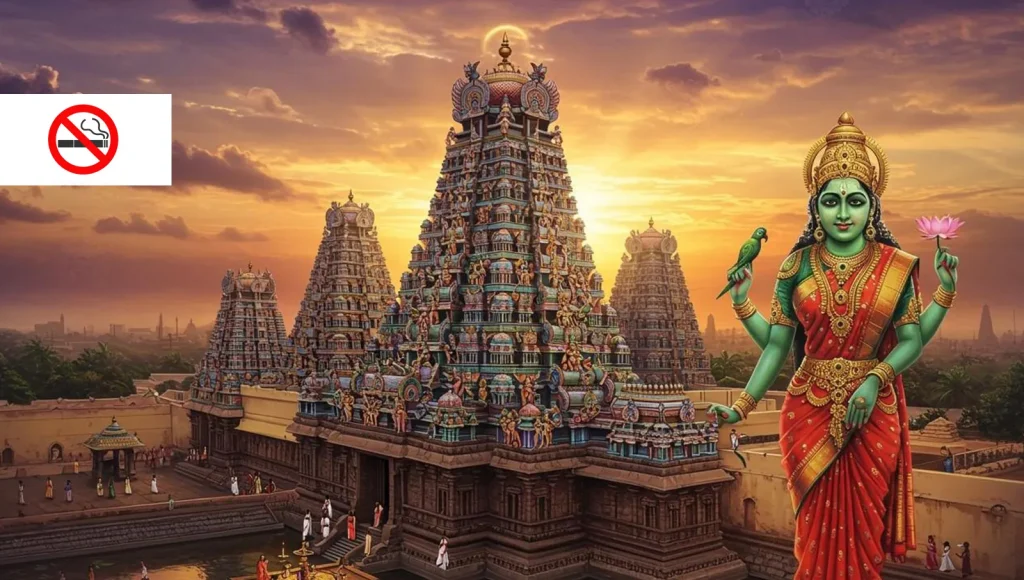
Cigarettes, chewing tobacco, lighters, matchboxes, and alcohol are not allowed inside the temple at all. These items are completely banned. The temple is a holy place for prayer and worship. Bringing smoking items or alcohol is seen as disrespectful. Security will not allow anyone to enter with these things.
Sharp Objects
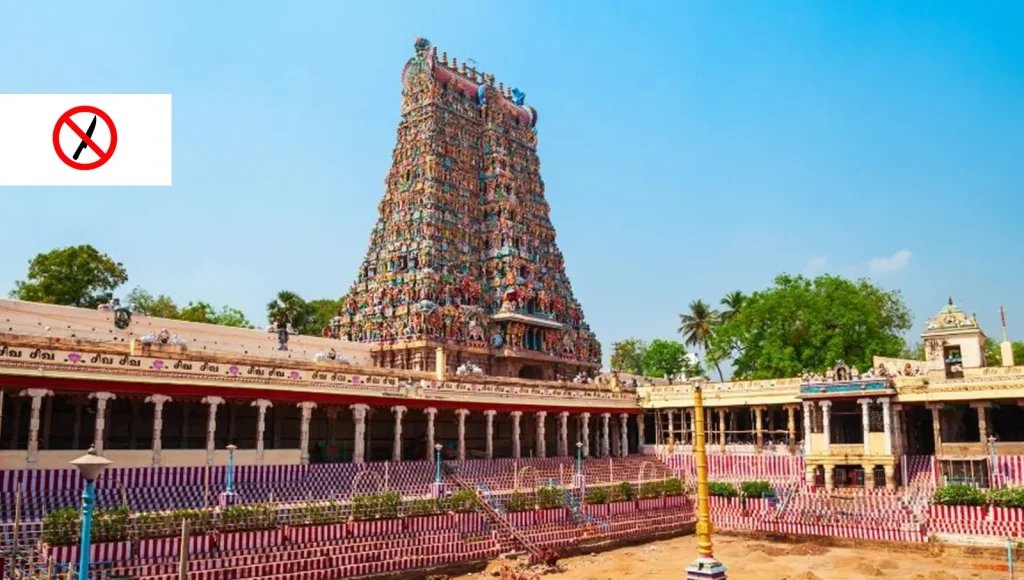
Do not bring knives, blades, or scissors inside the temple. These items are not allowed. Security checks bags at the entrance. If they find any sharp tools, they will be taken away. To avoid trouble, carry only simple and safe items.
Headphones and Music Devices
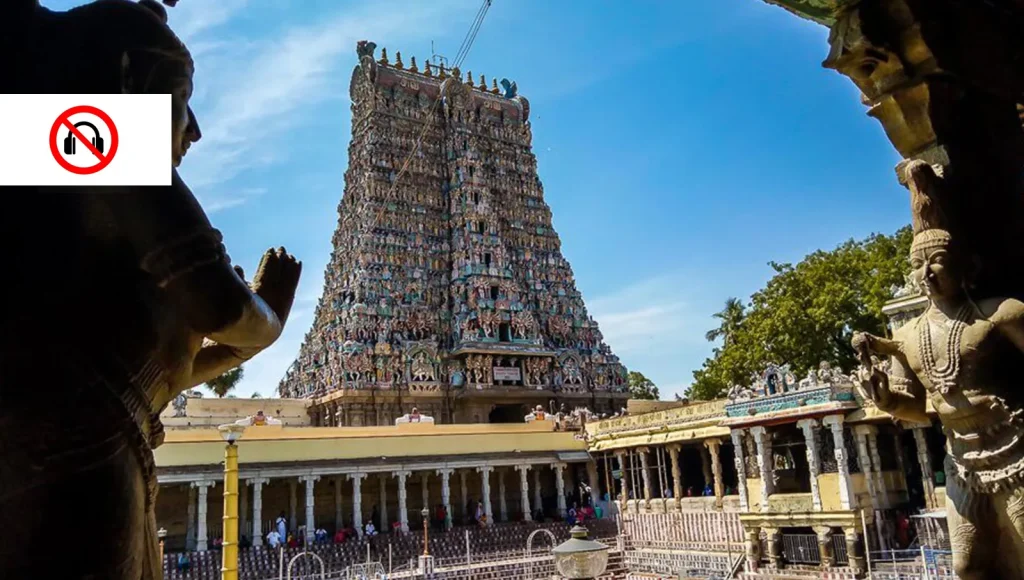
Headphones, earbuds, and music players are not allowed inside. The temple is a quiet place meant for prayer. People come here to chant and worship. Personal music devices disturb the peaceful atmosphere, so leave them outside.
Selfie Sticks and Tripods
Selfie sticks, tripods, and camera accessories are not permitted. Even though photography is banned inside, security may restrict these items to prevent misuse or disturbance.
What You Should Carry Instead
To avoid inconvenience, carry only:
- Small amount of cash
- Basic ID proof
- Non-leather minimal pouch
Leave electronics, extra accessories, and unnecessary items at your hotel.
Locker Facilities and How They Work
Secure lockers are available at all major entry gates. Visitors must deposit phones and cameras there. The locker service is paid but affordable. You will receive a token after depositing items. Keep that token safe, as it is required to collect your belongings later.
Footwear Rules
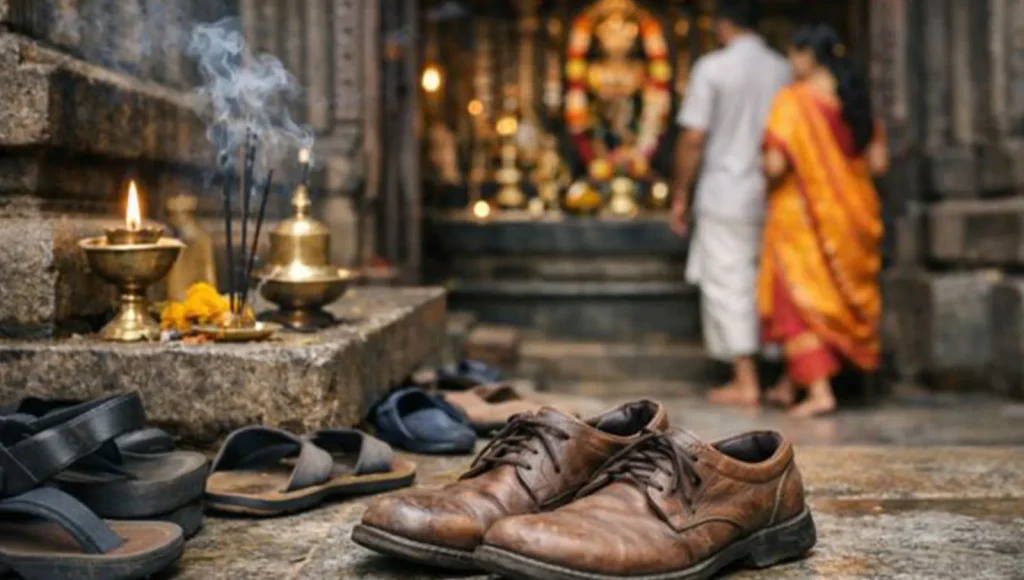
All visitors must remove footwear before entering the temple.
Shoe racks are available near entrances. They are paid services. Walking barefoot inside the temple is part of tradition and respect.
Security Check Process
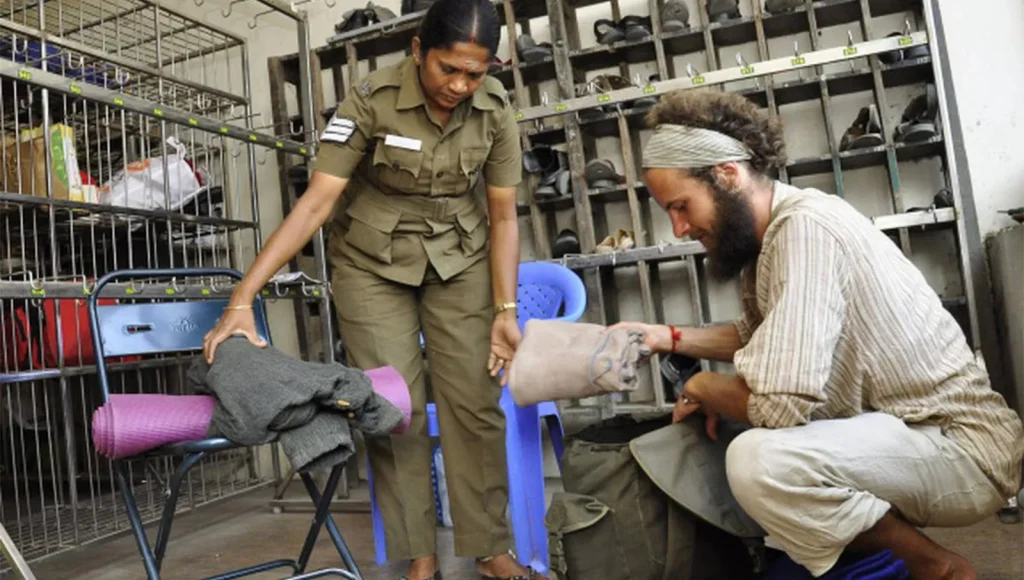
Expect proper security screening before entering. Arriving early helps avoid long queues. Carrying fewer items makes entry smoother. It is best to bring only cash and identification.
Temple Timings
The temple operates in two sessions daily.
Morning: 5:00 AM to 12:30 PM
Evening: 4:00 PM to 9:30 PM or 10:00 PM
Early morning visits are the best. The atmosphere feels calm, and the waiting time for darshan is shorter.
Best Time to Visit to Avoid Crowds
Visiting before 7:00 AM is highly recommended. The temple feels peaceful, and the lighting is beautiful. Weekends and festival days are much more crowded. During major festivals, waiting times can exceed 2 hours.
Photography Rules
Photography is completely banned inside the inner temple complex. This helps maintain a spiritual environment. However, photos of the outer towers, called gopurams, are allowed from outside. A gopuram is a tall, colourful gateway tower seen in South Indian temples.
Cultural Etiquette You Should Follow
Here’s a small list of etiquette that you may follow.
Silence and Behavior
Maintain silence near prayer areas. Avoid loud conversations and laughter. Do not touch idols, sculptures, or religious objects unless permitted. The temple is a place of worship first.
Queue Discipline
Darshan means seeing the deity. Visitors must stand in line patiently during darshan hours. Cutting lines or pushing is not tolerated. Follow the temple staff’s instructions at all times.
What If You Arrive Dressed Incorrectly?
If clothing does not meet guidelines, entry may be denied. Small shops outside sometimes sell shawls or traditional garments. However, it is better to prepare correctly rather than rely on last-minute fixes.
Weather Tips for Dressing Comfortably
Madurai is hot most of the year. Temperatures can go above 35°C in summer. Choose lightweight cotton fabrics that are breathable but modest. Avoid thick or heavy materials.
Advice for International Visitors
Foreign tourists are welcome but must follow the same rules as locals. If unsure about what to wear, buying a simple cotton salwar kameez or dhoti in Madurai is easy and affordable. It also adds to the cultural experience.
Festival Days and Extra Restrictions
During major temple festivals, security may be tighter. Crowds increase significantly, and waiting times grow longer. Dress code rules remain strict, even during celebrations.
Common Mistakes Visitors Make
Many visitors do not break the rules on purpose. Most mistakes happen because people assume temple rules are flexible, like tourist sites. Meenakshi Temple is not flexible about dress code or restricted items.
Wearing Sleeveless Clothing and Thinking a Scarf Is Enough
Some visitors wear sleeveless tops or short dresses and carry a scarf, thinking they can just cover up at the entrance. This does not always work. Temple authorities expect proper modest clothing, not temporary fixes. If the outfit underneath is considered inappropriate, staff may still deny entry even if a scarf is added. It is safer to wear full sleeves or properly covered clothing from the start.
Assuming Silent Mode Makes Phones Acceptable
Many people believe that putting their phone on silent mode solves the problem. It does not. Mobile phones are completely banned inside the temple complex, even if switched off. Security checks are strict, and phones must be deposited in lockers before entry. Trying to carry one inside can cause delays and inconvenience.
Wearing Shorts Because of the Heat
Madurai is hot for most of the year, so visitors sometimes choose shorts or knee-length clothing for comfort. Unfortunately, shorts are strictly not allowed, regardless of the temperature. Even modest-looking knee-length outfits may not meet the required standard. Lightweight cotton trousers or long skirts are the best solution for staying cool and compliant.
Bringing Leather Belts Without Realising They Are Restricted
Many visitors focus on clothing but forget about accessories. Leather belts, wallets, and handbags are often overlooked. Since leather comes from animal hide, it is considered unsuitable inside sacred Hindu spaces. Wearing a leather belt can result in being stopped at the gate and asked to remove or deposit it.
Carrying Large Bags “Just in Case”
Some visitors bring backpacks filled with extra items like snacks, chargers, water bottles, and cosmetics. Large bags slow down security checks and may not be allowed inside. Food items, electronics, and unnecessary belongings are restricted. Carrying only essentials makes entry faster and stress-free.
Ignoring Inner Sanctum Customs
Some men are surprised when asked to remove their upper garments in certain sacred areas. This is a traditional practice meant to show humility before the deity. Arguing or refusing can create unnecessary tension. Understanding this rule beforehand prevents confusion.
Arriving During Peak Festival Hours Without Planning
During festival periods, waiting times increase significantly. Security becomes stricter, and patience is required. Arriving early in the morning reduces stress and long queues.
Treating the Temple Like a Tourist Attraction
Talking loudly, laughing, or trying to take hidden photos can disturb devotees. The temple is a sacred spiritual space first. Respectful behaviour ensures a smooth experience for everyone.
Final Thoughts
Visiting Meenakshi Amman Temple is a spiritual and cultural experience. The rules may seem strict, but they are easy to follow once understood. Dress modestly. Leave phones outside. Remove footwear. Carry minimal items. Maintain silence and respect. Follow these guidelines to ensure a smooth and meaningful visit, and don’t forget to share your spiritual experience.
FAQs
Yes, non-Hindus are allowed to enter most parts of the temple complex.
No, the rules are the same for everyone. Foreign visitors are not given exceptions.
They are not mandatory if your outfit already covers your shoulders properly. However, carrying a light shawl can be useful if your clothing feels borderline modest.
Caps and hats are generally discouraged inside the main temple areas.
No, general temple entry does not require online booking. However, special darshan tickets or festival passes may sometimes require advance purchase. It depends on the season and crowd level.