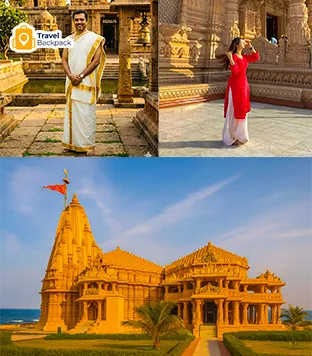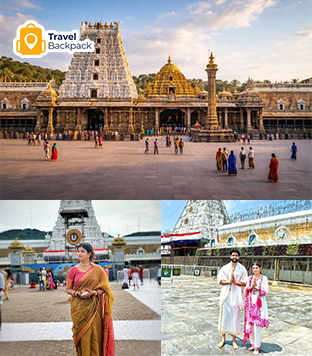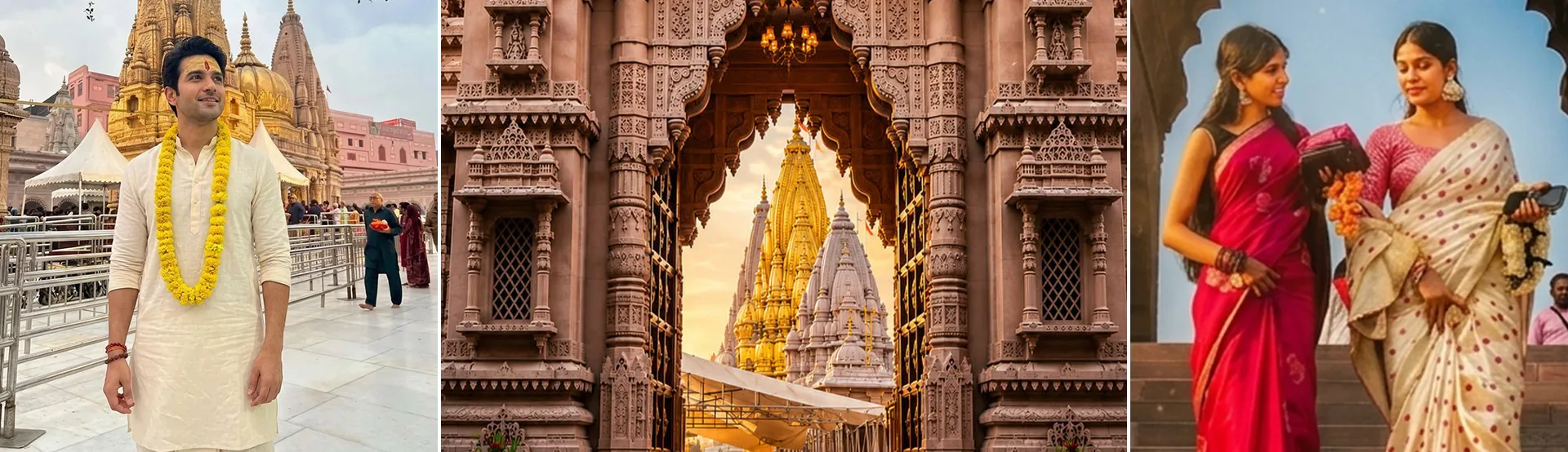
Before you think about darshan timings, hotel bookings, or the famous street food in Varanasi, there is one thing you should check first: what you can and cannot wear. A lot of people spend weeks planning their trip, but forget about the dress code. Then they reach the temple and realise they are not dressed for the type of darshan they had in mind. It can be frustrating, especially after travelling so far.
The good news is that the rules are not difficult. For a normal visit, you simply need to follow the Indian Temple Dress Code and dress modestly. Clothes should cover your shoulders and knees and should not be too tight or revealing. However, if you want to enter the Garbhagriha and perform Sparsh Darshan by touching the Shivling, there are extra rules you need to follow.
Knowing these rules before you leave home can save you time, avoid confusion, and help you enjoy a peaceful visit.
Does Kashi Vishwanath Temple Have a Dress Code?
Yes, it does. Everyone visiting the temple is expected to dress respectfully. The dress code is based on temple traditions and helps maintain the spiritual atmosphere inside one of the most important Shiva temples in India. For most visitors, modest clothing is enough for regular darshan. This implies that your clothing shouldn’t be too exposing or see-through, and it should cover your knees and shoulders.
The rules become stricter if you want to enter the Garbhagriha, which is the innermost part of the temple where the Jyotirlinga is located. Visitors who wish to perform Sparsh Darshan must wear traditional Indian clothing before they are allowed to enter.
Many first-time visitors are unaware of this difference. They assume one dress code applies everywhere inside the temple. In reality, the type of darshan you choose can affect what you are allowed to wear.
Why Does the Temple Have a Dress Code?
Kashi Vishwanath Temple is not just a famous tourist attraction. It is an active place of worship where thousands of devotees come every day to pray, perform rituals, and seek blessings. Just like many churches, mosques, and temples around the world, visitors are expected to dress in a way that shows respect for the place they are entering.
The rules are not meant to make your visit difficult. They are there to protect the temple’s traditions and help maintain a respectful atmosphere for everyone.
What Does “Modest Clothing” Actually Mean?
When people hear the phrase “modest clothing,” they often think there must be a long list of complicated rules.
There really isn’t and the idea is quite simple.
Your shoulders and knees should be covered. Furthermore, your clothes should not be very tight, see-through, or too revealing. That is what the temple expects for general entry.
If you are still unsure, ask yourself one question.
“Would I wear this to a family wedding or a religious event?”
If the answer is yes, your outfit will probably be suitable for the temple as well.
Regular Darshan vs Sparsh Darshan: What’s the Difference?
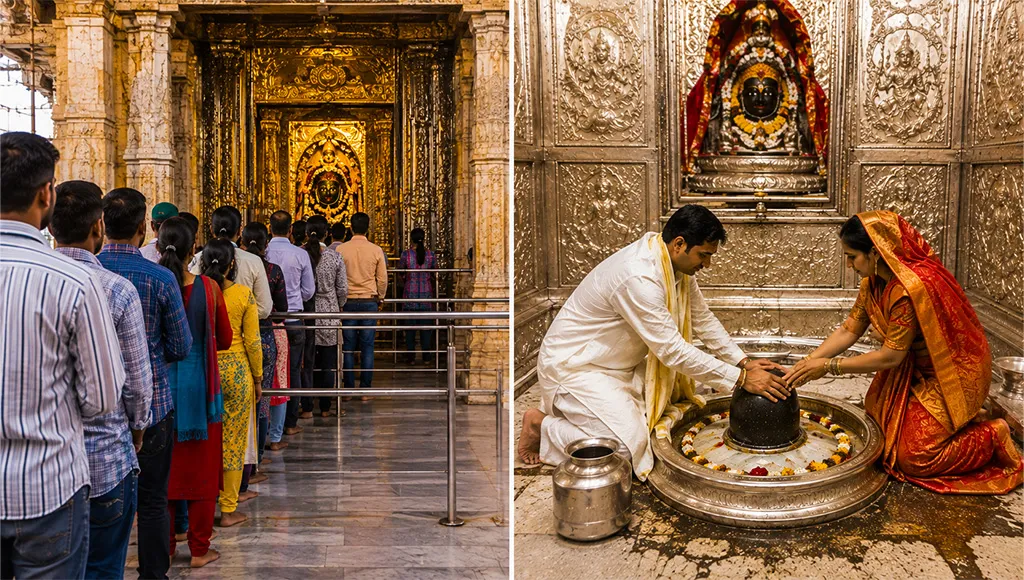
Many people think there is only one type of darshan, but that is not the case. For a regular darshan, visitors can enter the temple and have a view of the deity while following the general dress code.
Sparsh Darshan is different. It allows devotees to enter the Garbhagriha and touch the sacred Jyotirlinga during their worship. Because this is considered a more traditional form of darshan, visitors must also wear traditional clothing. For men, this usually means a dhoti and kurta. For women, it usually means a saree.
If you arrive wearing western clothing, you may still be able to have regular darshan, but you may not be allowed inside the inner sanctum for Sparsh Darshan. That is why it is a good idea to decide which type of darshan you want before choosing your outfit.
What Should Men Wear to Kashi Vishwanath Temple?
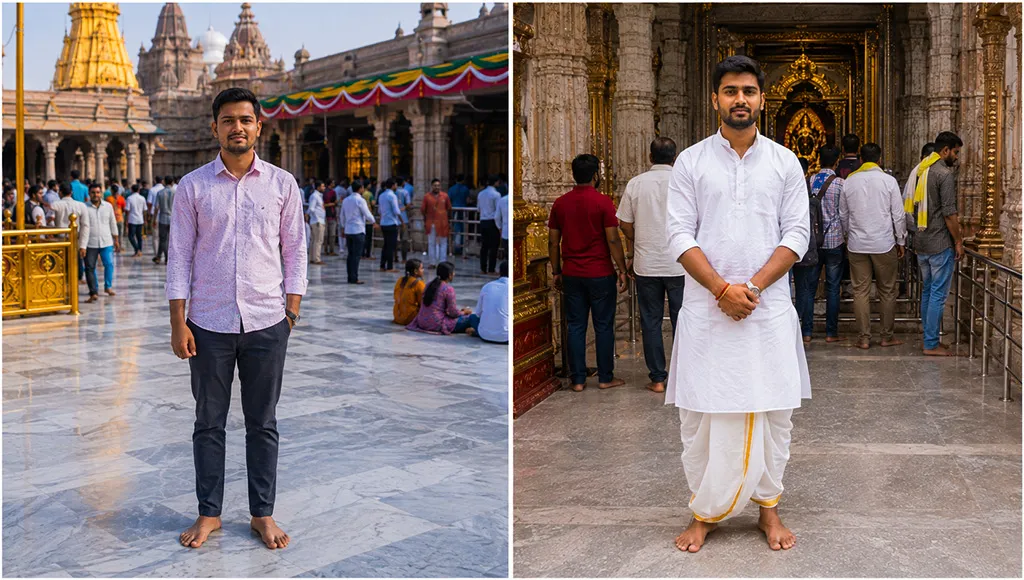
For men, choosing the right outfit is quite simple. You do not need to wear expensive clothes or buy a whole new wardrobe before your trip. The main thing is to dress in a way that feels respectful. If you are visiting for regular darshan, a full-length pair of trousers with a simple shirt or kurta is usually a safe choice. Many visitors wear this every day without any issues. The focus is not on fashion. It is on showing respect inside the temple.
If you are planning to perform Sparsh Darshan, the rules are different. Men are expected to wear a dhoti and kurta before entering the Garbhagriha. This traditional dress is part of the temple’s customs and is required for devotees who wish to enter the inner sanctum.
Clothes Men Should Avoid
Some clothes are better left for another day. Shorts, sleeveless vests, ripped jeans, and very casual outfits are not suitable for the temple. Even if the weather is hot, it is best to choose light clothes that still cover your body properly. A simple tip is to dress as if you are attending an important family or religious event. If your outfit feels respectful there, it will usually be a good choice for the temple too.
What Should Women Wear to Kashi Vishwanath Temple?
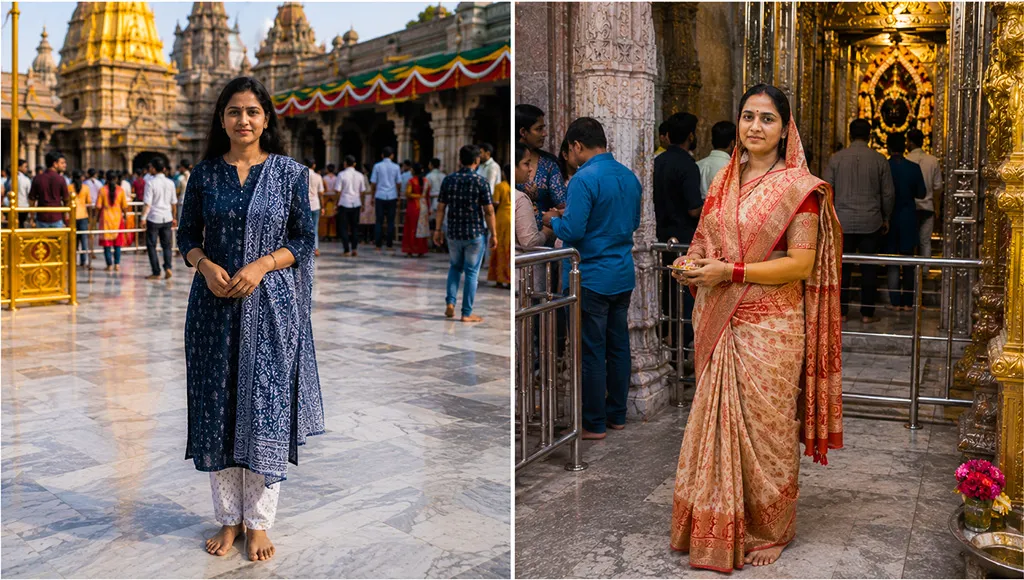
Women also need to dress modestly before entering the temple. The good news is that there are plenty of suitable options, and many visitors already have clothes that meet the guidelines. For regular darshan, sarees, salwar kameez, and kurtis with leggings or palazzos are all popular choices. These outfits are comfortable, respectful, and commonly worn by both pilgrims and tourists.
If you plan to perform Sparsh Darshan, you are usually required to wear a saree before entering the Garbhagriha. Many women choose to wear one from the start, so they do not have to worry about changing later.
Clothes Women Should Avoid
Some outfits may not be suitable for the temple. Short dresses, crop tops, sleeveless tops, very tight clothing, and outfits that show too much skin should be avoided. The same goes for clothes made from see-through fabric.
If you are unsure about your outfit, choosing something a little more modest is always the safer option. It is better to feel comfortable than to worry about whether your clothes will be accepted at the entrance.
Can You Wear Jeans to Kashi Vishwanath Temple?
One of the most often asked questions is this one. The sort of darshan you desire will determine the response.
Regular Darshan
If you are coming for regular darshan, simple full-length jeans with a modest top may be accepted. However, ripped jeans, low-waist styles, or very tight jeans are not a good choice and should be avoided.
Sparsh Darshan
If you want to perform Sparsh Darshan, western clothes are not enough. Men are expected to wear a dhoti and kurta, while women are expected to wear a saree before entering the Garbhagriha.
To keep things simple, many visitors choose traditional clothing from the start. It saves time and avoids any confusion once they reach the temple.
Is Traditional Clothing Better?
For many visitors, yes. Traditional clothing adheres to the temple’s rules and helps avoid last-minute problems. It also feels more in keeping with the temple’s spiritual atmosphere. That does not mean you must wear traditional clothes for a normal visit. But if you are planning to enter the inner sanctum, it is definitely the safest option.
Things You Cannot Take Inside the Temple
The dress code is only one part of the rules. Many tourists are shocked to discover that a number of everyday use objects are likewise prohibited within the shrine. Knowing this before you arrive can save you time and make your visit much smoother.
Mobile Phones and Smart Devices
The temple complex prohibits the use of cell phones, cameras, smartwatches, power banks, and other technological devices. You will need to leave them in the lockers or cloakrooms outside before entering.
Shoes Must Be Removed
Like many temples in India, Kashi Vishwanath Temple does not allow footwear inside. You will need to remove your shoes or sandals before entering. Many visitors wear simple slip-on shoes because they are easy to put on and take off after darshan.
Bags and Leather Items
Heavy bags and large backpacks are not permitted within the shrine. It is also best to avoid carrying leather items whenever possible. Travelling light will help you move through security checks more quickly and make your visit easier.
Final Thoughts
The dress code at Kashi Vishwanath Temple is not difficult to follow, but it is important to understand the difference between regular darshan and Sparsh Darshan before you visit. For general entrance, most visitors just need to wear modest apparel that covers their knees and shoulders. However, if your goal is to enter the Garbhagriha and perform Sparsh Darshan, traditional clothing is part of the temple’s requirements.
It is also worth checking the entry rules before you arrive. Leaving your phone, smart devices, and other restricted items behind can save you time and help your visit go much more smoothly.
The ultimate goal of the clothing code is to honor one of the world’s most significant Hindu temples. Share your Experience with us and let us know how you found the temple’s dress code and cultural traditions.
FAQs
Indeed. It is expected of visitors to dress modestly. Traditional clothing is required if you wish to enter the Garbhagriha for Sparsh Darshan.
Yes. All visitors must remove their footwear before entering the temple.
It is best to avoid bringing leather items into the temple. Travelling light will also make the security process easier.
Yes. International visitors should carry their original passport, as it may be required for identity verification.
Yes, provided they follow the temple’s dress code and any other entry rules in place at the time of their visit.
Choose modest clothing, decide which type of darshan you want before you arrive, carry only the essentials, and check the latest temple guidelines before your visit.