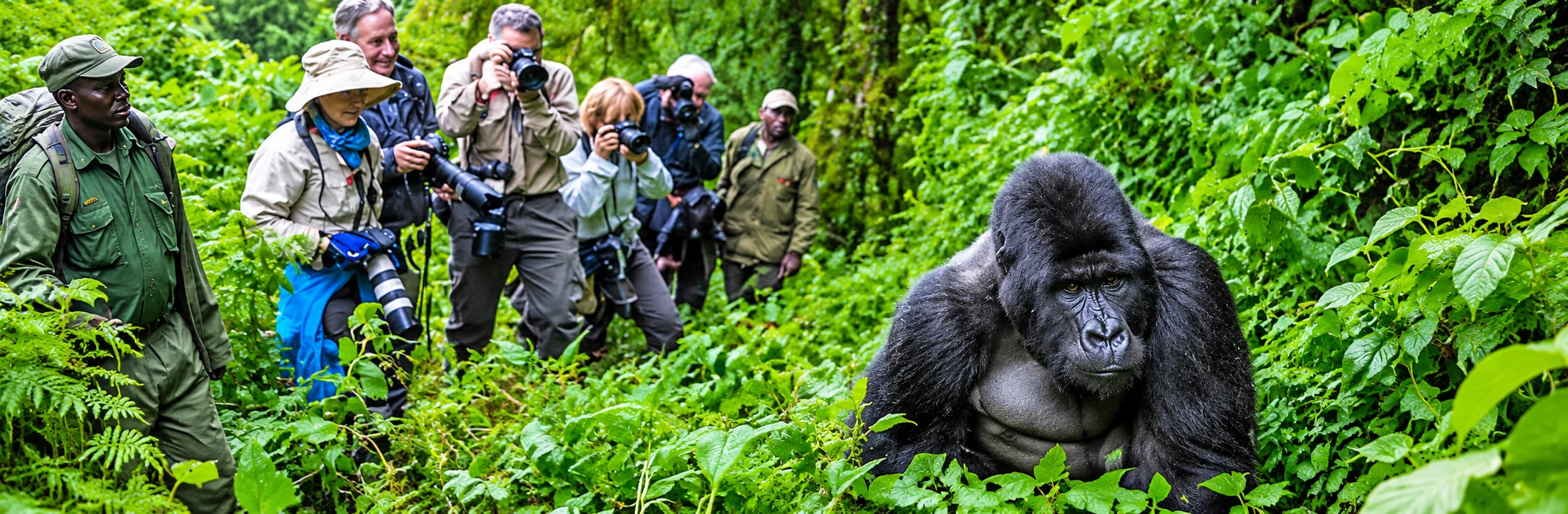
Gorilla trekking is a unique wildlife experience in the tropical forests of Uganda, Rwanda, and the DR Congo. Planning a gorilla trekking safari in Africa often raises several questions. Understanding those questions can help you make informed decisions when booking for a gorilla safari. Drawing on our experience with gorilla safaris in East Africa, we have compiled answers to some of the most frequently asked questions about gorilla trekking to help you understand the experience and plan your gorilla trekking adventure seamlessly.
What is gorilla trekking?
Gorilla trekking is a guided wildlife experience that involves hiking through tropical forests in Uganda and Rwanda to observe habituated wild gorillas in their natural habitat. Trained guides and armed rangers lead treks, working with experienced trackers to locate a specific gorilla family. Once found, a small group of visitors can spend 1 hour observing gorillas’ behavior and taking photos from a safe distance.
Which gorilla species can you see in Africa?
Africa is home to two gorilla species: the eastern gorilla (Gorilla beringei) and the western gorilla (Gorilla gorilla), each divided into two subspecies. Eastern gorillas comprise mountain gorillas (Gorilla beringei beringei) and eastern lowland gorillas, also known as Grauer’s gorillas (Gorilla beringei graueri). Western gorillas comprise western lowland gorillas (Gorilla gorilla gorilla) and Cross River gorillas (Gorilla gorilla diehli). Mountain gorillas are the primary focus of classic gorilla trekking safaris in East Africa and are found exclusively in Uganda, Rwanda, and eastern DR Congo. Western lowland gorillas can be trekked in the Republic of Congo and Gabon, and Cross River gorillas are not officially offered for trekking.
Where do mountain gorillas live?
Wild mountain gorillas, the only gorilla subspecies with no individuals living in captivity, are found exclusively in two isolated, high-altitude forest regions in East-Central Africa, with a combined global population of approximately 1,064 individuals according to the International Gorilla Conservation Program.
The Virunga Massif
A chain of eight major volcanoes spanning the borders of Uganda, Rwanda, and the Democratic Republic of Congo (DR Congo). In this area, mountain gorillas are protected across three contiguous protected areas: Volcanoes (Rwanda), Mgahinga Gorilla (Uganda), and Virunga National Parks (DR Congo).
The Bwindi-Sarambwe Ecosystem
Located just north of the Virungas, this ancient afro-montane forest encompasses UNESCO World Heritage site Bwindi Impenetrable National Park in southwestern Uganda and the adjoining Sarambwe Nature Reserve in eastern DR Congo.
What is the Virunga environment like, and what should I expect on a mountain gorilla trek?
The Virunga Massif is a chain of eight volcanoes rising to 4,507 meters at Mount Karisimbi. Trekking parks in this massif include Rwanda’s Volcanoes and Uganda’s Mgahinga Gorilla National Parks, protecting the volcanic slopes. The vegetation on these slopes changes with elevation from tropical and bamboo forests and Hagenia-Hypericum woodlands to higher subalpine and alpine zones, with occasional open herbaceous pockets or saddles between peaks. Trekking gorillas in Virunga involves hiking mostly along the slopes of a volcano such as Bisoke, with either a sustained ascent or descent through bamboo groves or dense, lush Hagenia woodlands, depending on where the gorillas are feeding at the time.
What is trekking in Bwindi like?
Bwindi ecosystem is an ancient steep-sided afro-montane forest landscape characterized by dense tree canopy and a thick, tangled understory of shrubs, ferns, vines, and epiphytes, the very reason it earned the name “Impenetrable”. As such, trekking in Bwindi means navigating a rugged series of steep ridges and deep valleys at elevations between 1,160 m and 2,600 m. Depending on the gorillas’ location, treks can begin on established forest paths or head straight off-trail, where trackers often use pangas (machetes) to clear a narrow path through dense vegetation. The nature of terrain differs across Bwindi’s four sectors, with Buhoma generally offering gentler forest hikes and Ruhija steeper treks.
Is gorilla trekking safe?
Yes, gorilla trekking is very safe, mainly in Uganda and Rwanda, where tourism is regulated by the Uganda Wildlife Authority (UWA) and Rwanda Development Board (RDB). Visitors on gorilla treks are accompanied by trained guides and armed rangers who monitor gorilla families daily and maintain safety and security across the gorilla protected areas. By contrast, gorilla trekking in DR Congo, both in Kahuzi-Biega and in Virunga National Parks, along with Nyiragongo hiking, remains suspended due to ongoing regional instability.
Travelers should rely on official park advisories before considering a visit. Because gorilla habitats are wild, unfenced forests, visitors may occasionally encounter wild animals such as forest elephants and buffaloes. Armed rangers are trained to manage these situations safely, as long as visitors stay together and follow their guide’s instructions at all times. As with any remote, active adventure, booking through a reputable operator and carrying comprehensive travel insurance (including medical evacuation) is strongly recommended.
Where can you go gorilla trekking in Uganda and Rwanda?
Responsible mountain gorilla trekking takes place across three national parks in southwestern Uganda and northwestern Rwanda, which include the following:-
Bwindi Impenetrable National Park
Uganda’s flagship gorilla trekking destination, home to over 25 habituated gorilla families spread across four distinct trekking sectors of Buhoma, Ruhija, Rushaga, and Nkuringo, each with its own trailhead and visitor briefing center. Bwindi is also the only place offering the four-hour Gorilla Habituation Experience in the Ruhija sector.
Mgahinga Gorilla National Park
Located on the Ugandan slopes of the Virunga Volcanoes, Mgahinga has one habituated gorilla group (the Nyakagezi family). While most travelers book Bwindi, Mgahinga offers a quieter, more exclusive trekking experience, with only eight permits issued per day.
Volcanoes National Park
Rwanda’s only gorilla trekking park lies on the Rwandan side of the Virunga Massif and is about a 2.5- to 3-hour drive north of Kigali. There are over 12 habituated gorilla families, making for Africa’s most convenient gorilla trekking destination for shorter itineraries.
What is a standard gorilla trekking experience?
Standard gorilla trekking allows a group of only eight visitors to spend up to one hour observing a fully habituated mountain gorilla family in its natural habitat. Accompanied by trained ranger guides and advance trackers, you hike through the forest to locate the family, and the one-hour clock starts only once you reach the gorillas, excluding the hike to reach the gorillas.
What is gorilla habituation experience?
The Gorilla Habituation Experience is a conservation-focused activity offered exclusively in the Rushaga sector of Uganda’s Bwindi Impenetrable National Park, allowing up to four visitors to spend up to four hours with a semi-habituated mountain gorilla family alongside researchers, trackers, and rangers. Habituation is a gradual 2- to 5-year process in which researchers follow wild gorillas daily and try to get closer by mimicking how they chew vegetation, knuckle-walking, and using gentle vocalizations until the family becomes comfortable seeing humans around.
Because the gorillas are still adjusting to being around people, they tend to be shyer, move more frequently through dense cover, or occasionally show mild defensive behavior, making the trek longer and more immersive. The Uganda gorilla habituation permit costs $1,500 USD per permit through December 2026 and $1,800 from January 2027.
How long does it take to locate gorillas?
The time it takes to hike from the briefing point to locate a gorilla family can range from 30 minutes to more than 6 hours. Because wild gorillas move freely as they search for food, the duration is unpredictable, so it is best to pack water and snacks and be prepared for a full day on the trail.
How difficult is gorilla trekking?
Gorilla trekking can be challenging because of the terrain. The difficulty depends on where the assigned gorilla family is located on the day of the trek. You need to prepare for the day.
What is the age limit for gorilla trekking?
The minimum age for gorilla trekking in Uganda and Rwanda is 15 years. Children below this age are not permitted to take part in the activity, mainly due to the safety and conservation considerations involved in entering the natural habitat of wild mountain gorillas. This age restriction applies to both standard gorilla trekking and the Gorilla Habituation Experience.
Is gorilla trekking doable for seniors?
Yes. Senior travelers can participate in gorilla trekking, as long as they are physically able to walk. Those with limited ability to hike can hire a porter who will assist by giving a helping hand and carrying your backpack. Sedan chairs are available for those who cannot walk; you will be seated and carried by a team of porters to see the gorillas and back.
When is the best time to go gorilla trekking?
Gorilla trekking in Uganda and Rwanda is available year-round. However, some seasons offer favorable hiking conditions, allowing flexibility in planning. The dry season, which generally occurs from June to September and December to February, tends to make forest trails relatively drier and less muddy, making hiking conditions more manageable. These months are popular with international travelers planning gorilla safaris.
The rainy seasons generally occur from March to May and October to November. Rainfall can make forest trails muddy and slippery, making trekking more difficult. However, rain does not necessarily prevent gorilla trekking, and visitors can still enjoy rewarding encounters during these months. Ultimately, there is no single best time to see mountain gorillas. The choice depends on your travel schedule, preferred hiking conditions, and other experiences you wish to include in your gorilla safari. With appropriate preparation, gorilla trekking can be enjoyed in any season.
How much does a gorilla trekking permit cost?
The cost of a gorilla trekking permit varies by country, the visitor’s residency or nationality category, and the type of experience. Uganda gorilla permit costs are $800 per person for foreign non-residents, $700 for foreign residents, $500 for the rest of Africans, and 300,000 UGX for East African Citizens, which applies to standard trekking. The gorilla habituation permit cost is $1,500 per person. The Rwanda gorilla permit costs $1,500 for foreign non-residents, $500 for foreign residents in Rwanda and African citizens/residents in Africa, and $200 for Rwandan and East African citizens.
How far in advance should you book a gorilla trekking permit?
You should book your gorilla trekking permit at least 3 to 6 months in advance, and up to 12 months ahead if you plan to travel during peak dry seasons from June to September and December to February. Because daily permits are strictly limited to 8 visitors per gorilla family, high-demand dates tend to sell out months in advance through UWA and RDB.
Can you book a gorilla permit directly or through a tour operator?
In Uganda, foreign non-residents must book a permit through a licensed tour operator. Foreign residents and East African citizens can book directly through official UWA online reservation systems or at their head offices in Kamwokya, Kampala. In Rwanda, the RDB manages gorilla trekking permits for Volcanoes National Park. Travelers can apply through the official RDB online booking platform, where they can check availability, submit their details, and pay for their permits.
What happens on the day of gorilla trekking?
A gorilla trekking day usually begins early in the morning; visitors must leave their accommodations on time and head to the designated park registration and briefing point. The exact reporting time depends on the distance from your lodge to the briefing point, but it is usually between 7:00 and 7:30 am.
Registration and permit verification
On arrival, visitors present their gorilla trekking permits and identification documents, including a passport, for verification. Park officials confirm the booking before allowing visitors to proceed.
7:30 – 8:00 am Morning briefing and allocation of gorilla families
Visitors assemble and meet ranger guides who conduct a briefing covering the trekking rules for observing mountain gorillas. Visitors are then organized into trekking groups, with a maximum of eight people permitted to visit a habituated gorilla family in a day for normal trekking. A maximum of four people are allowed for those participating in the habituation experience. Rangers can assess visitors and allocate them accordingly. Park authorities allocate a specific gorilla family on the morning of the trek.
Entering the forest
After the briefing, visitors are introduced to their ranger guides and begin the hike into the forest. Trackers who have gone ahead to locate the gorilla families communicate their findings to the guides, helping them determine the direction to follow. The hike can take anywhere from a relatively short walk to several hours, depending on the location and movement of the gorillas.
Meeting the gorillas
Once the trackers locate the assigned family, the ranger guides lead visitors towards the gorillas. The group is given up to one hour to observe the animals in their natural habitat. During this encounter, visitors may see gorillas feeding, grooming, resting, playing, or interacting with other family members. The ranger guides explain their behavior and ensure that visitors follow the established conservation and safety rules.
Returning from the forest
After the viewing period, visitors leave the gorilla family and follow their guides back through the forest to the designated starting point. The return journey can also involve considerable hiking, depending on the gorillas’ location. Although the general sequence is similar in Uganda and Rwanda, the precise arrangements, reporting times and trekking routes vary between parks. Visitors should therefore follow the instructions of their respective wildlife authorities and guide.
What should you wear and pack for gorilla trekking?
Gorilla trekking takes place in tropical forests and can be challenging because of the terrain. Visitors should therefore wear comfortable hiking clothing that protects them from rain, insects, thorns, and stinging nettles and allows freedom of movement.
What to wear
Hiking boots
Sturdy, waterproof hiking boots with good grip and ankle support are recommended for navigating forest trails. Break in boots before the safari to avoid blisters.
Long trousers
Lightweight hiking trousers protect the legs from stinging nettles, thorny vegetation, insects and mud.
Long-sleeved shirts
These protect the arms from scratches, insect bites and vegetation.
Gardening gloves
Lightweight gardening gloves are useful when holding onto branches and vegetation for support when hiking through steep terrain.
Rain jacket
A lightweight waterproof jacket with a hood is essential, as rainfall can occur at any time of year.
Warm layer
A fleece jacket or light sweater is useful during cool mornings, particularly if you plan to trek in Bwindi Impenetrable Forest.
Long socks or gaiters
Tucking trousers into socks or wearing gaiters helps protect the lower legs from biting safari ants and from getting wet.
Neutral-colored clothing such as green, brown, khaki, and grey is generally recommended. Avoid bright colors and military-style camouflage clothing, which civilians are not permitted to wear in Uganda.
What to carry during the trek?
Visitors should carry a small backpack containing the essentials for the forest hike, including drinking water, packed lunch and energy snacks, camera and spare batteries, waterproof bag or rain cover to protect electronic equipment, sunscreen and insect repellent, hat or cap, personal medication and a small first-aid kit, including blister plasters.
A walking stick is usually available at the park briefing point and can be helpful when navigating slippery or steep trails.
Visitors are encouraged to keep their luggage light and hire a porter to carry their backpack if necessary. Porters are available at the trekking centers and assist while also earning income from tourism. It is advisable to prepare for rain, mud, and changing temperatures, regardless of the season you are traveling in. Appropriate clothing and equipment can significantly improve comfort during the trek.
Can you take photographs or record videos during gorilla trekking?
Yes. Photography is one of the highlights of a gorilla trekking tour. Visitors can capture memorable moments with mountain gorillas in their natural habitat. However, specific rules are in place to protect gorillas and ensure photography does not disturb them. No flash photography is allowed since it can disturb gorillas. Visitors should switch off their camera flashes before approaching the gorilla family.
How close can you get to mountain gorillas?
In Uganda, visitors are currently instructed to maintain a distance of at least 10 meters (approximately 33 feet) from gorillas and a minimum distance of 7 meters (approximately 23 feet) in Rwanda. Visitors should follow the regulations and instructions provided by their ranger guides during the trek. This is because mountain gorillas are wild animals and do not always respect these distances. A gorilla may occasionally approach, pass closer, or move through the trekking group. If a gorilla approaches you, remain calm, avoid sudden movements, do not attempt to touch it, and follow what the ranger guide instructs you to do.
What happens if a gorilla charges at you?
You are advised not to touch, run, scream, make sudden movements, or stare directly into the gorilla’s eyes. Depending on the situation, the ranger may instruct visitors to remain still, crouch down slowly, or adjust their position. Mountain gorillas are generally peaceful animals.
However, they are wild and can react or charge when they feel threatened, disturbed, or protective of their family members. The male silverback can display authority by chest beating, loud vocalizations, ground slapping, throwing vegetation, or a sudden charge. This does not necessarily mean that the gorilla intends to attack visitors physically. Ranger guides are experienced in interpreting gorilla behavior and managing such encounters. As a result, visitors must always stick to the group and follow the ranger.
How do you book a responsible gorilla safari?
Mountain gorillas are an endangered subspecies whose survival depends on continued conservation efforts and the protection of their natural habitats. Although their populations have increased through decades of conservation work, they still face threats such as habitat loss, human-wildlife conflict, poaching, disease, and insecurity in parts of their range.
As such, booking a responsible gorilla safari is one way you can contribute to conservation, which in turn supports the communities living around their protected habitats. This can be done in several ways, including choosing responsible accommodation and tour operators, hiring local porters, purchasing locally made products and participating in community and cultural experiences. These activities help spread tourism benefits across the entire tourism value chain.
Another way to become a responsible traveler is to respect the rules set by wildlife authorities. Visitors should maintain the required distance from gorillas, avoid touching or feeding them, and avoid littering in the parks. By choosing responsible tourism practices, visitors contribute to an experience that supports wildlife conservation and also creates meaningful benefits for the people who share their landscapes with mountain gorillas.