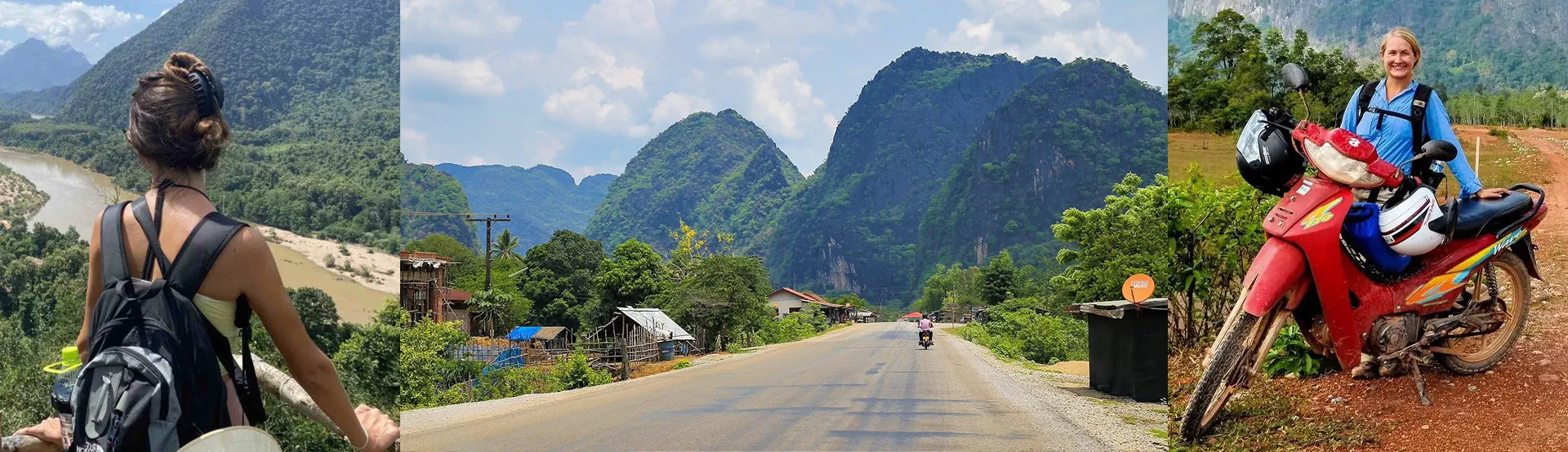
The Thakhek Loop is not a big thrill for a motorbike adventure in Southeast Asia, and that’s a good thing. It lacks the traffic jams of the Ha Giang Loop in Vietnam and the stampede of the discoverers that any viral road trip seems to attract these days. Rather than that, the Thakhek Loop is a delight for a small motorcycle rider who seeks to discover the Lao heartland. It has limestone karst, caves with rivers, a few villages with their only guesthouse, and long stretches of road without any motorbike passing annoying you.
The whole circuit is about 450 km around the Khammouane province and back to the place where you have started. Plenty of people ride it in three days. I took four, and I would recommend that to anyone who does not want the trip to turn into a series of long afternoons in the saddle. The extra day is what turns the loop from a distance to be covered into a place to spend time.
Renting the bike and getting out of town
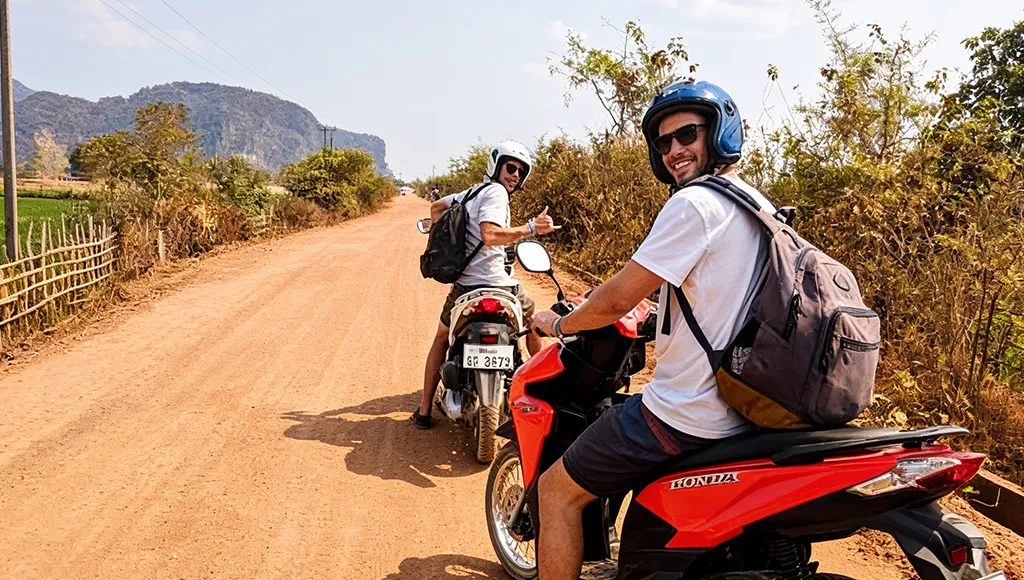
The town of Thakhek itself is a sleepy riverside hamlet on the Mekong, facing Thailand across the river. Most people take a bus to get there, spend the night, rent a bike, and head off the very next day. As for transportation, the standard for these parts is a semi-automatic scooter – nothing fancy, just a two-stroke that requires a foot to change gears, but no clutch at all. If you have ever driven a scooter of any kind in Asia, you will have no trouble whatsoever at Thakhek. The roads are all paved, save some bad stretches of gravel on the western edge of the region, and the only challenge is to slow down to a crawl on them, not to test your skills.
As for baggage, leave your things at the guesthouse in Thakhek and take anything light with you on the bike. Everything you can possibly imagine is available in shops and restaurants at the place, so a small bag with a couple of t-shirts, a raincoat, a swimming suit, and a charger will do for the four-day trip. It is impossible to overprepare for a journey like this – and yet, at the same time, there is no particular need, aside from bringing a few more clothes and batteries. Everything else can be stowed on a bicycle rack on your back for four days.
Caves, water, and an empty road
The first day out of Thakhek is the easiest introduction to what the region does well. Within an hour you reach the first limestone caves, and the pattern of the trip sets in. You ride, you spot a sign, you park the bike, you walk into something cool and dark and much older than the road you came in on.
The stops in this stretch are close together, which is why a slower pace pays off. There are swimming spots where a river runs clear and green between the cliffs, and there are cave temples set into the rock with a few Buddha figures inside. None of them are heavily managed. You often pay a small local fee to a family who keeps an eye on the entrance, and then you have the place more or less to yourself. Bring your own light. The phone torch that seems fine outside becomes useless twenty metres into a cave.
By the afternoon the villages thin out and the road opens up. This is the part of the loop people remember: rice paddies, karst peaks in every direction, and almost no signs of anyone. It is easy riding and hard to rush, because you keep stopping to look.
The quiet middle
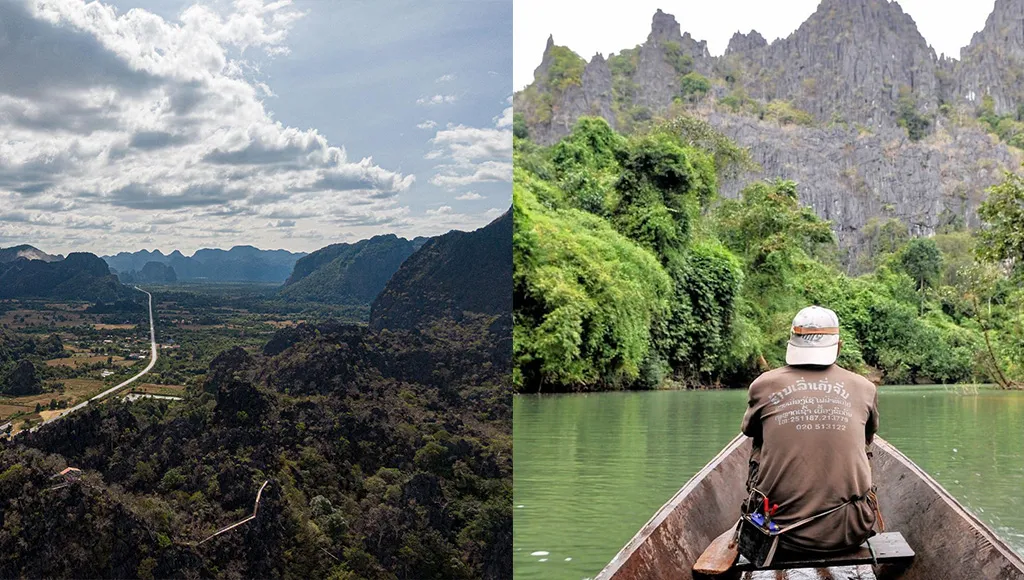
The second and third days lead you along the far side of the loop, past a vast reservoir where a dam has flooded the valley. Here, the landscape is littered with trees that have been felled by the rising waters, their skeletal remains blackened and bleached in places by the water. It’s a desolate view, but it’s also one of the oddest and most unforgettable impressions of the ride. There’s a village on the far side of the lake, where a number of riders choose to spend the night, staying in twin-room camping huts with a bed, a fan, and a shared meal of whatever local fare is available.
This is where four days earns its keep. You are far enough from any town that the evening has nothing to fill it, so you end up talking to the handful of other people doing the same route, or just sitting with a drink and watching the light go. Nothing about it is dramatic. That is the point.
Kong Lor Cave
The loop builds towards Kong Lor, and it deserves the buildup. It is a river cave over seven kilometres long, and you go through it the only way you can, sitting low in a narrow longtail boat while a boatman navigates the dark by memory and a headlamp. The ceiling opens high above you in places and drops close in others. At one point you climb out to walk through a lit section of rock formations, then get back in the boat and carry on until daylight appears at the far end.
You come out into a completely different valley, spend a while there, then ride the boat straight back through the cave to where you started. It is the one part of the trip that feels genuinely rare, and it works better as the reward at the end of three days of riding than it would as a day trip on its own.
What the four days add up to
The Thakhek Loop rewards a traveller who is happy to be underwhelmed for stretches and then quietly amazed. It is not a bucket-list stunt. It is a slow read of a part of Laos that most itineraries skip, and the four-day version leaves room to actually notice it.
These days I work on a [travel-planning platform](https://pack-lightly.com), and central Laos is exactly the kind of region that gets a paragraph in most guides and deserves a chapter. If you have the time and can ride a scooter without drama, this is a good place to spend it.
Wouter is a former marketer who now works full time on Pack Lightly, a multilingual travel platform. He has spent the last few years backpacking across Asia, from the loops of Laos and Vietnam to the trekking routes of Nepal. Share your experience with us!