
Travel feels exciting, but it also brings moments that make people think, pause, and sometimes even worry. New places, new roads, strange airports, unfamiliar cities, and long hours on the move can make a journey feel unpredictable. In Islam, travel is not only a physical act. It also becomes a spiritual experience in which the heart remembers Allah. This is why Muslims recite specific duas before leaving home, while travelling, and when returning.
Travelling dua, often called Dua al-Safar, carries deep meaning. It teaches the traveller to depend on Allah above all else. This article explains the meaning of the travelling duas, why they matter, and how they can make every journey feel protected and peaceful.
Why Travelling Dua Holds Such a Special Place in Islam
In Islam, travel has always been connected to learning, discovery, and spiritual growth. Muslims are encouraged to move around the world, explore different cultures, and observe the signs of Allah in nature and society. Along with this encouragement, Islam also teaches caution and the remembrance of Allah.
Dua al Safar
Travel was dangerous in earlier times, with long deserts, unknown paths, and no modern transport. Even today, with planes and highways, travel can still bring uncertainty. The Dua for Travelling helps protect the traveller spiritually, reminding them that Allah controls every moment of the journey.
This dua shows humility. It reminds the believer that, even though vehicles seem strong and powerful, humans cannot control anything without Allah’s permission. Something as simple as sitting in a car or boarding a plane becomes a moment of worship. The dua also prepares the heart emotionally.
How the Prophet Muhammad (PBUH) Taught Muslims to Use This Dua
The Prophet Muhammad (peace be upon him) recited specific duas whenever he began a journey. He taught his companions to do the same. These duas were not only a habit but also a way of nurturing faith. The Prophet showed Muslims how to rely entirely on Allah while still using the tools of the world. Many authentic narrations mention how he would glorify Allah.
The Main Duas for Travelling
Below are the essential duas for leaving home, beginning the journey, riding a vehicle, entering a new place, and returning home. Each dua is explained clearly so the reader understands both the words and the meaning.
1. Dua for Leaving the Home
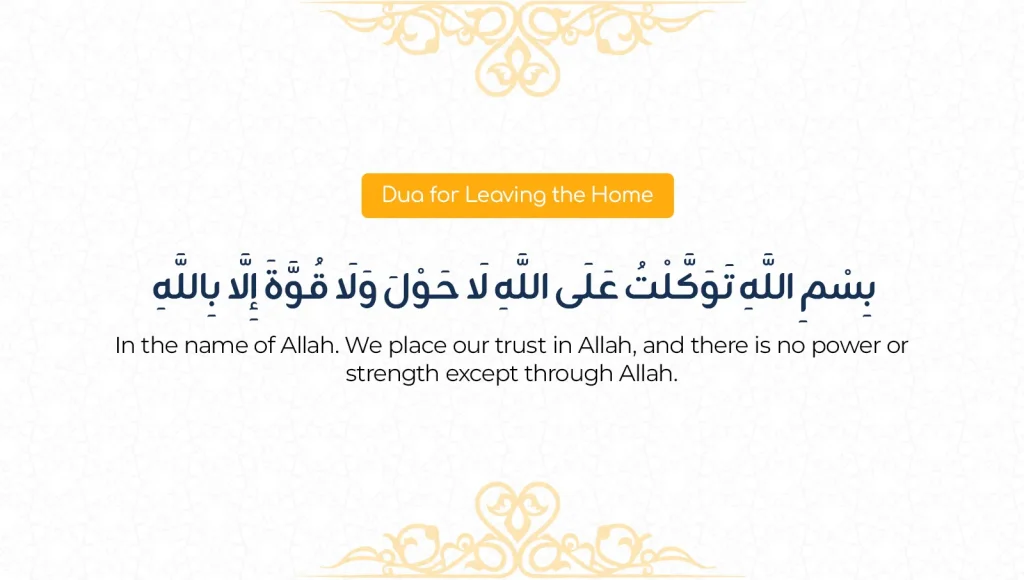
بِسْمِ اللَّهِ تَوَكَّلْتُ عَلَى اللَّهِ لَا حَوْلَ وَلَا قُوَّةَ إِلَّا بِاللَّهِ
Translation
“In the name of Allah. We place our trust in Allah, and there is no power or strength except through Allah.”
Meaning
This dua teaches the traveller to depend on Allah for every step outside the house. It creates a sense of guidance, protection, and support. When a Muslim says “tawakkaltu ‘ala Allah,” it means trusting Allah completely while still taking practical steps.
2. Dua for Starting the Journey (Dua al-Safar)
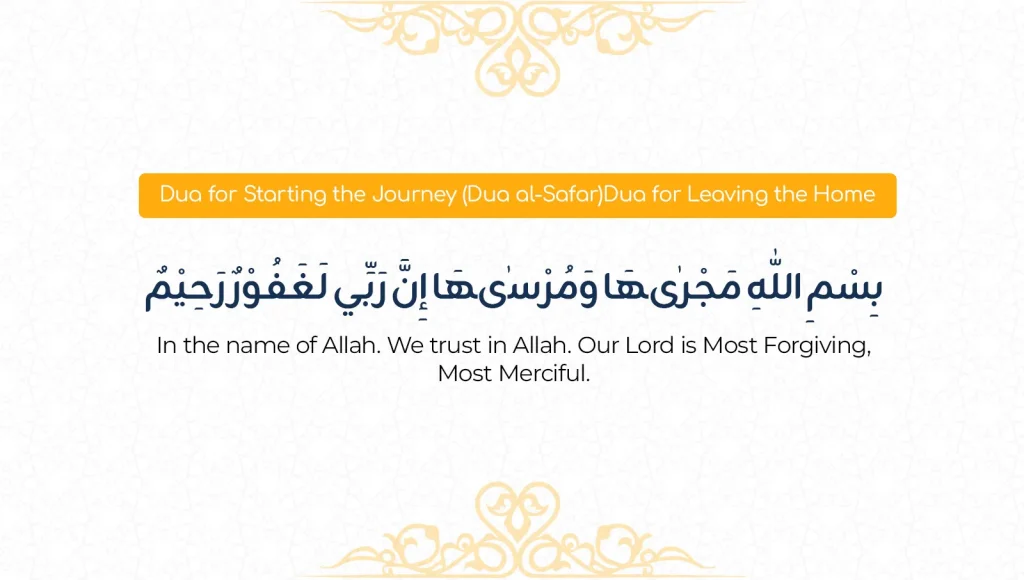
بِسْمِ اللّٰهِ مَجْرٰىهَا وَمُرْسٰىهَا إِنَّ رَبِّي لَغَفُوْرٌ رَحِیْمٌ
Translation
“In the name of Allah. We trust in Allah. Our Lord is Most Forgiving, Most Merciful.”
Meaning
This dua begins the journey with the name of Allah. It reminds the traveller that movement, direction, and arrival all depend on Allah’s mercy. The dua also expresses hope that Allah will make the journey smooth.
3. Dua For Travelling in Car or Mode of Transport
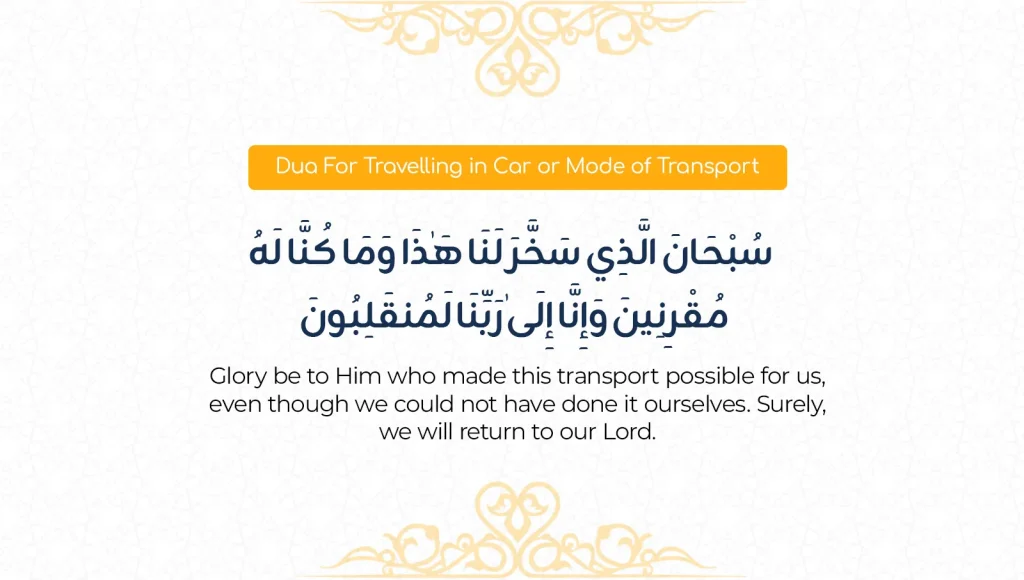
سُبْحَانَ الَّذِي سَخَّرَ لَنَا هَٰذَا وَمَا كُنَّا لَهُ مُقْرِنِينَ وَإِنَّا إِلَىٰ رَبِّنَا لَمُنقَلِبُونَ
Translation
“Glory be to Him who made this transport possible for us, even though we could not have done it ourselves. Surely, we will return to our Lord.”
Meaning
This dua acknowledges that modern forms of transportation, such as cars, planes, and trains, are blessings from Allah. Humans may invent tools, but the ability to use them safely comes from Allah. The line “we will return to our Lord” reminds travellers that life itself is a journey back to Allah.
4. Dua for a Safe Journey

اللَّهُمَّ هَوِّنْ عَلَيْنَا سَفَرَنَا هَذَا وَاطْوِ عَنَّا بُعْدَهُ
(shortened version)…
Translation (shortened meaning)
“O Allah, make this journey easy for us, shorten its distance for us, and be our Companion throughout.”
Meaning
This dua expresses several requests at once. The traveller asks for ease, safety, and comfort. The dua also mentions seeking protection from sadness, hardship, and harm that may occur along the way.
5. Dua for Entering a New City or Town
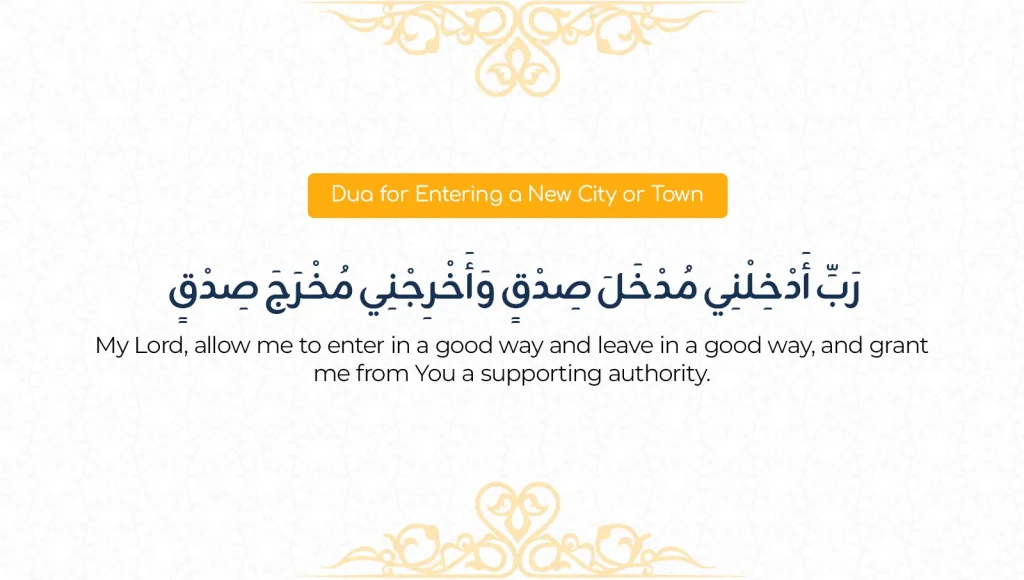
رَبِّ أَدْخِلْنِي مُدْخَلَ صِدْقٍ وَأَخْرِجْنِي مُخْرَجَ صِدْقٍ…
Translation
“My Lord, allow me to enter in a good way and leave in a good way, and grant me from You a supporting authority.”
Meaning
This dua asks for safety, blessing, protection, and success when entering new places. It is recited when entering a new environment, reminding the traveller that every place has both challenges and goodness.
6. Dua for Returning Home Safely
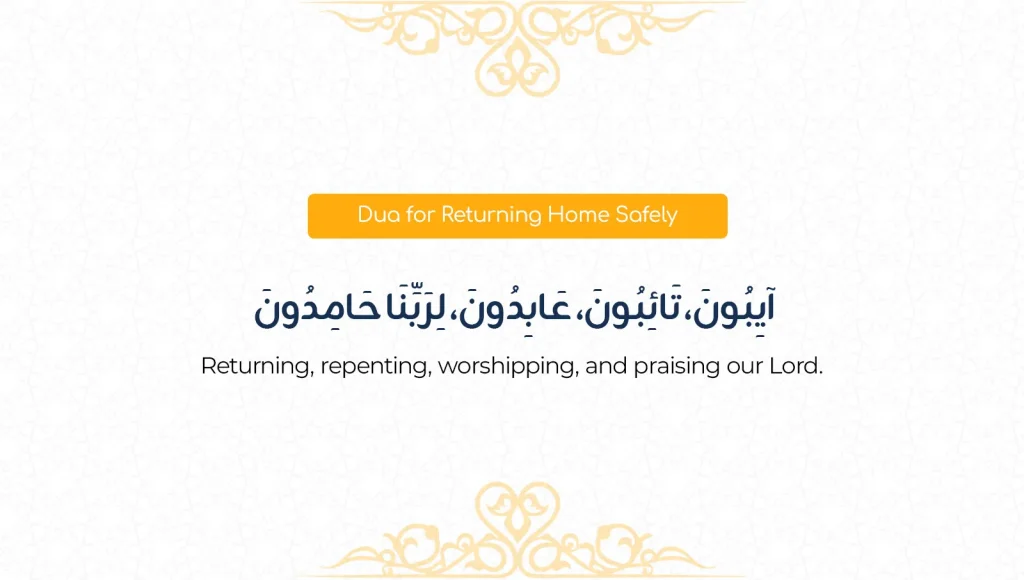
آيِبُونَ، تَائِبُونَ، عَابِدُونَ، لِرَبِّنَا حَامِدُونَ
Translation
“Returning, repenting, worshipping, and praising our Lord.”
Meaning
This dua is filled with gratitude. It recognises that safe return is a gift. It teaches believers to return home with a cleaner heart, renewed faith, and an appreciation for Allah’s protection throughout the journey.
Duas from the Quran for Travelling
One of the well-known travel duas comes from Surah Az-Zukhruf (43:13-14). The verses remind believers that Allah created the means of transport and allowed humans to benefit from them.
سُبْحَانَ الَّذِي سَخَّرَ لَنَا هَٰذَا…
Meaning
These verses highlight how humans cannot create such blessings on their own. Whether it is a ship, a car, or a plane, none of these tools would exist without Allah’s permission. The Quranic reminder shapes the traveller’s mindset and builds gratitude.
Hadith About the Traveller’s Dua Being Accepted
The Prophet (PBUH) said that the dua of a traveller is never rejected. This hadith teaches believers that travel is a moment of closeness to Allah. When someone is on the road, far from everyday routines, the heart becomes softer and more sincere. This sincerity allows duas to be accepted more quickly.
Dua for Travelling by Plane
The same dua recited for riding a camel during the Prophet’s time applies to modern vehicles. Even though modes of transport have changed, the spiritual meaning remains the same. Whether travelling by plane, car, or train, the dua is still relevant. Pilgrims performing Umrah can also recite it throughout their Umrah journey, keeping every step of their travel spiritually guided and protected.
Special Dua for Resting or Staying Overnight
When someone stays in a hotel, guesthouse, or camping area, this dua helps protect them from unseen harm:
أَعُوذُ بِكَلِمَاتِ اللَّهِ التَّامَّاتِ مِنْ شَرِّ مَا خَلَقَ
Translation
“We seek refuge in the Perfect Words of Allah from the evil of what He has created.”
This dua feels comforting when settling into a new place, especially when the surroundings are unfamiliar.
Benefits of Reciting Travel Dua
Dua softens the heart. When someone begins their trip with remembrance of Allah, the journey feels guided and meaningful. The dua also helps reduce fear of the unknown by creating an emotional shield.
Mental Benefits
Travel can bring nervous thoughts, especially on long journeys. These duas provide mental peace. The words remind travellers that Allah never abandons them. This sense of peace makes travelling smoother.
Emotional Benefits
When someone reads a dua, they feel connected to a bigger purpose. Travel becomes more than movement; it becomes worship.
Acceptance of Prayers
Islam teaches that the dua of a traveller is accepted. This makes travel a powerful time to pray for personal needs, forgiveness, guidance, and blessings.
Final Thoughts
The dua for travelling is more than just words. Every journey, whether long or short, becomes safer and more meaningful when started with dua. These prayers help travellers trust Allah, stay calm, and feel spiritually connected. They also remind believers that life itself is a journey, and Allah’s wisdom guides every step.
Muslims are encouraged to teach these duas to children, practice them regularly, and use them to strengthen their faith. When a believer recites a dua before travel, they wrap their journey in safety.
FAQs
Do I have to recite the travelling dua out loud, or can I say it in my heart?
Both are allowed. The Prophet (PBUH) sometimes recited duas aloud to teach others, but a dua is accepted whether spoken quietly or silently in the heart. What matters most is sincerity and intention, not volume.
Can I read the travelling dua from my phone if I don’t have it memorised?
Yes. Reading from a phone, paper, or app is completely fine. Duas are acts of remembrance, not tests of memory. Over time, constant use will naturally help you memorise them.
Is it necessary to sit in a vehicle before reciting the dua?
The dua for mounting a vehicle is linked explicitly to sitting on the ride. But the dua for starting the journey can be recited before that. So the timing depends on which dua you’re saying.
Can I say the travelling dua even if the journey is very short?
Yes. Even short trips can bring unexpected challenges, and the duas still bring blessings and protection. Many scholars argue that even local travel can serve as an opportunity for remembrance.
Does the dua still apply if I’m travelling by modern means of transport, like planes?
Absolutely. The dua was revealed in a time of camels, but its meaning is universal. Whether riding a camel or sitting in a plane, the idea is the same: Allah made this movement possible.
If I forget to recite the dua before leaving, can I say it later?
Yes. If someone forgets, they may recite it at any point in the journey. Allah is Merciful and does not punish believers for forgetfulness. Saying it later is still better than not saying it at all.
Can children recite the travelling dua?
Yes, and it’s even encouraged. Teaching children travel duas helps them grow up with Islamic habits.
Can I combine the duas, or must they be read separately?
You can read them one after another if you want. Some people recite the leaving-home dua, then the Safar Dua, then the vehicle dua. There’s no rule restricting combinations.
Is it sinful if I forget to recite any dua during the journey?
No. Travel duas are sunnah, not mandatory. Forgetting them does not bring sin, but reciting them brings blessings.
Can I recite the dua in English if I don’t know Arabic?
You may recite the meaning in your language, but if possible, try to recite the Arabic text even a little. The Arabic words carry the exact wording the Prophet (PBUH) used, but Allah accepts all sincere prayers regardless of language.
Can I recite the dua before the plane takes off?
Yes. You may recite it while boarding, while sitting, before takeoff, or even while the plane is ascending.